n. [ Cf. F. sécante. See Secant, a. ] 1. (Geom.) A line that cuts another; especially, a straight line cutting a curve in two or more points. [ 1913 Webster ]
2. (Trig.) A right line drawn from the center of a circle through one end of a circular arc, and terminated by a tangent drawn from the other end; the number expressing the ratio of this line to the radius of the circle. See Trigonometrical function, under Function. [ 1913 Webster ]
Secco painting, or Painting in secco, painting on dry plaster, as distinguished from fresco painting, which is on wet or fresh plaster. [ 1913 Webster ]
v. i. [ imp. & p. p. Seceded; p. pr. & vb. n. Seceding. ] [ L. secedere, secessum; pref se- aside + cedere to go, move. See Cede. ] To withdraw from fellowship, communion, or association; to separate one's self by a solemn act; to draw off; to retire; especially, to withdraw from a political or religious body. [ 1913 Webster ]
2. (Eccl. Hist.) One of a numerous body of Presbyterians in Scotland who seceded from the communion of the Established Church, about the year 1733, and formed the Secession Church, so called. [ 1913 Webster ]
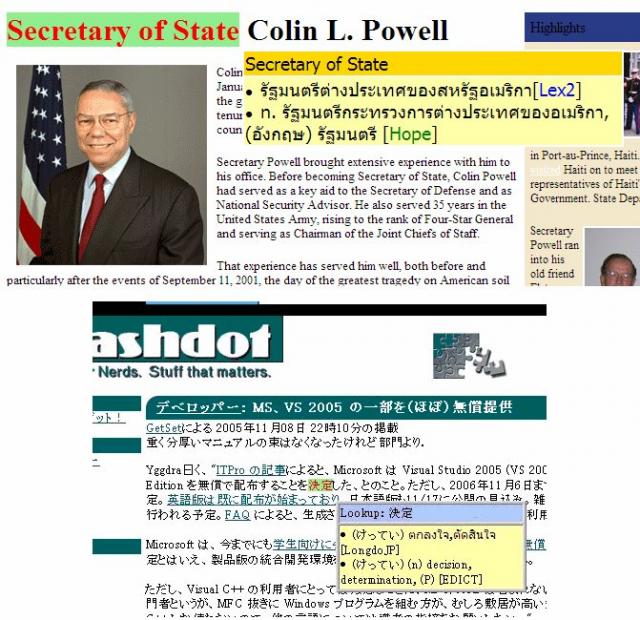
แสดงได้ทั้งความหมายของคำเดี่ยว และคำผสม ได้อย่างถูกต้อง
เช่น Secretary of State=รัฐมนตรีต่างประเทศของสหรัฐฯ (ในภาพตัวอย่าง),
High school=โรงเรียนมัธยมปลาย