n. [ Cf. F. désavantage. ] 1. Deprivation of advantage; unfavorable or prejudicial quality, condition, circumstance, or the like; that which hinders success, or causes loss or injury. [ 1913 Webster ]
I was brought here under the disadvantage of being unknown by sight to any of you. Burke. [ 1913 Webster ]
Abandoned by their great patron, the faction henceforward acted at disadvantage. Palfrey. [ 1913 Webster ]
2. Loss; detriment; hindrance; prejudice to interest, fame, credit, profit, or other good. [ 1913 Webster ]
They would throw a construction on his conduct, to his disadvantage before the public. Bancroft.
a. [ Cf. F. désavantageux. ] Attended with disadvantage; unfavorable to success or prosperity; inconvenient; prejudicial; -- opposed to advantageous; as, the situation of an army is disadvantageous for attack or defense. [ 1913 Webster ]
Even in the disadvantageous position in which he had been placed, he gave clear indications of future excellence. Prescott.
-- Dis*ad`van*ta"geous*ly, adv. -- Dis*ad`van*ta"geous*ness, n. [ 1913 Webster ]
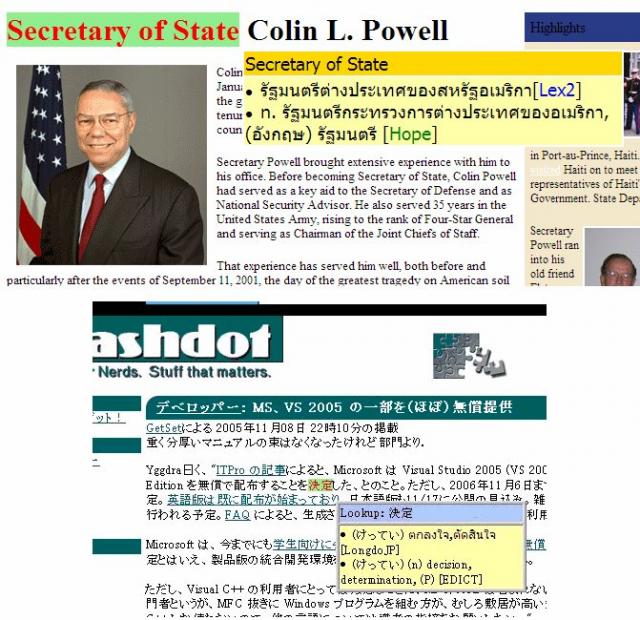
แสดงได้ทั้งความหมายของคำเดี่ยว และคำผสม ได้อย่างถูกต้อง
เช่น Secretary of State=รัฐมนตรีต่างประเทศของสหรัฐฯ (ในภาพตัวอย่าง),
High school=โรงเรียนมัธยมปลาย