{ } a. [ L. pharmaceuticus, Gr. farmakeytiko`s, fr. farmakey`ein: cf. F. pharmaceutique. See Pharmacy. ] Of or pertaining to the knowledge or art of pharmacy, or to the art of preparing medicines according to the rules or formulas of pharmacy; as, pharmaceutical preparations. -- Phar`ma*ceu"tic*al*ly, adv. [1913 Webster]
Pharmaceutical chemistry, that department of chemistry which ascertains or regulates the composition of medicinal substances. [1913 Webster]
n. [ Gr. fa`rmakon medicine + E. dynamics. ] That branch of pharmacology which treats of the action and the effects of medicines in the body, and also their distribution in various bodily tissues over time, and their breakdown and excretion. [ Webster 1913 Suppl. +PJC ]
n. [ Gr. fa`rmakon a drug + gnw^sis a knowing. ] That branch of pharmacology which treats of unprepared medicines or simples; -- usually called pharmacognosy, and also pharmacography, and pharmacomathy. [ 1913 Webster ]
n. [ Gr. fa`rmakon drug, poisonous drug + -lite: cf. F. pharmacolithe. ] (Min.) A hydrous arsenate of lime, usually occurring in silky fibers of a white or grayish color. [ 1913 Webster ]
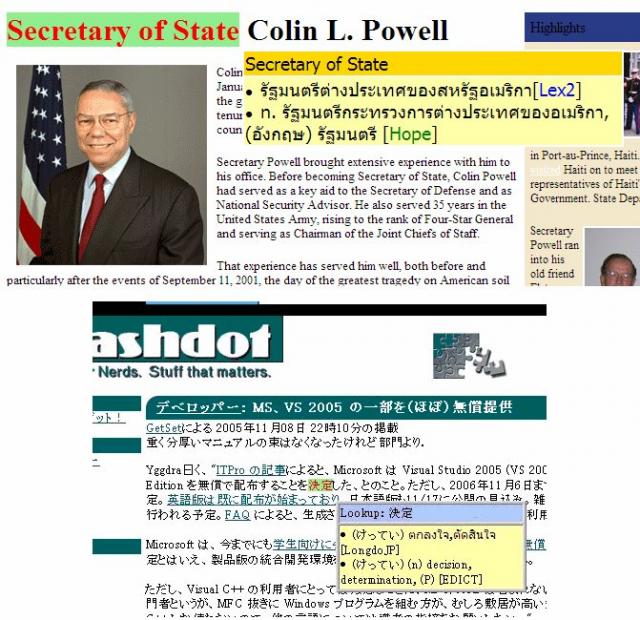
แสดงได้ทั้งความหมายของคำเดี่ยว และคำผสม ได้อย่างถูกต้อง
เช่น Secretary of State=รัฐมนตรีต่างประเทศของสหรัฐฯ (ในภาพตัวอย่าง),
High school=โรงเรียนมัธยมปลาย