a. [ LL. irritants, -antis, p. pr. of irritare to make null, fr. L. irritus void; pref. ir- not + ratus established. ] (Scots Law) Rendering null and void; conditionally invalidating. [ 1913 Webster ]
The states elected Harry, Duke of Anjou, for their king, with this clause irritant; that, if he did violate any part of his oath, the people should owe him no allegiance. Hayward. [ 1913 Webster ]
a. [ L. irritans, -antis, p. pr. of irritare: cf. F. irritant. See Irritate to excite. ] Irritating; producing irritation or inflammation. [ 1913 Webster ]
1. That which irritates or excites. [ 1913 Webster ]
2. (Physiol. & Med.) Any agent by which irritation is produced; as, a chemical irritant; a mechanical or electrical irritant. [ 1913 Webster ]
3. (Toxicology) A poison that produces inflammation. [ 1913 Webster ]
Counter irritant. See under Counter. -- Pure irritant (Toxicology), a poison that produces inflammation without any corrosive action upon the tissues. [ 1913 Webster ]
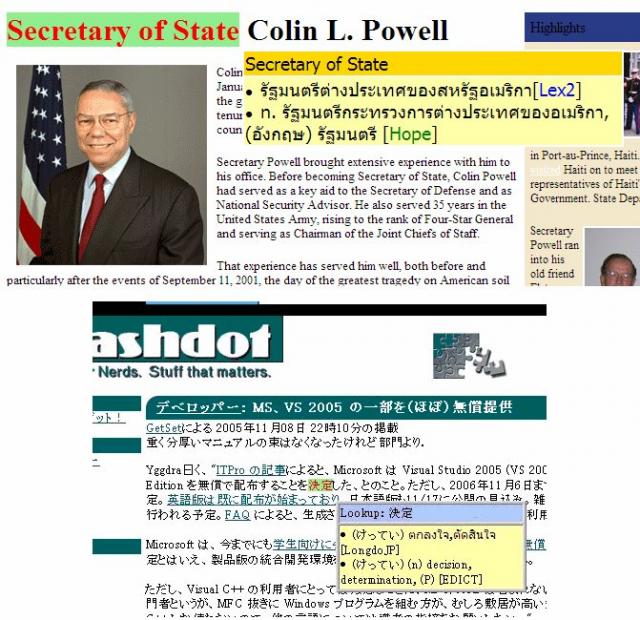
แสดงได้ทั้งความหมายของคำเดี่ยว และคำผสม ได้อย่างถูกต้อง
เช่น Secretary of State=รัฐมนตรีต่างประเทศของสหรัฐฯ (ในภาพตัวอย่าง),
High school=โรงเรียนมัธยมปลาย