a. [ L. infirmus: cf. F. infirme. See In- not, and Firm, a. ] 1. Not firm or sound; weak; feeble; as, an infirm body; an infirm constitution. [ 1913 Webster ]
A poor, infirm, weak, and despised old man. Shak. [ 1913 Webster ]
2. Weak of mind or will; irresolute; vacillating. “An infirm judgment.” Burke. [ 1913 Webster ]
Infirm of purpose! Shak. [ 1913 Webster ]
3. Not solid or stable; insecure; precarious. [ 1913 Webster ]
He who fixes on false principles treads or infirm ground. South.
n.; pl.Infirmaries [ Cf. OE. fermerie, OF. enfermerie, F. infirmerie, LL. infirmaria. See Infirm. ] A hospital, or place where the infirm or sick are lodged and nursed gratuitously, or where out-patients are treated. [ 1913 Webster ]
n.; pl.Infirmities [ L. infirmitas : cf. F. infirmite. See Infirm, a. ] 1. The state of being infirm; feebleness; an imperfection or weakness; esp., an unsound, unhealthy, or debilitated state; a disease; a malady; as, infirmity of body or mind. [ 1913 Webster ]
'T is the infirmity of his age. Shak. [ 1913 Webster ]
2. A personal frailty or failing; foible; eccentricity; a weakness or defect. [ 1913 Webster ]
Will you be cured of your infirmity ? Shak. [ 1913 Webster ]
A friend should bear his friend's infirmities. Shak. [ 1913 Webster ]
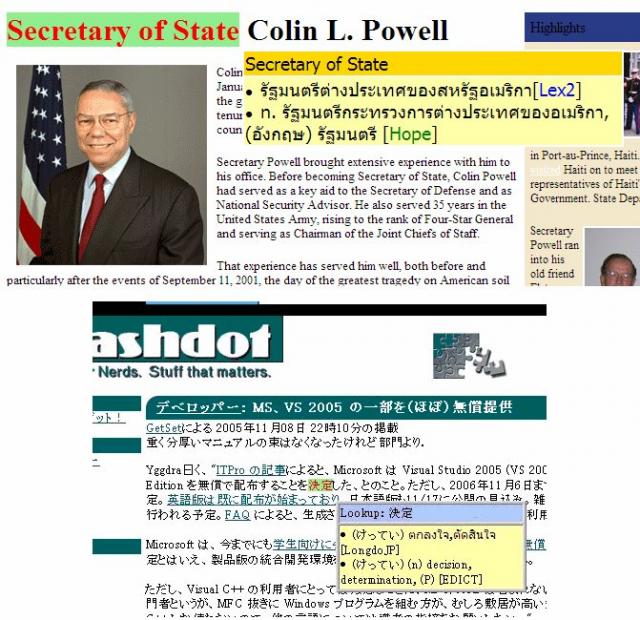
แสดงได้ทั้งความหมายของคำเดี่ยว และคำผสม ได้อย่างถูกต้อง
เช่น Secretary of State=รัฐมนตรีต่างประเทศของสหรัฐฯ (ในภาพตัวอย่าง),
High school=โรงเรียนมัธยมปลาย