ประโยคภาษาอังกฤษใช้บ่อยในที่ทำงาน คุณเคยเจอสถานการณ์นี้ไหม? เวลาคุยภาษาอังกฤษกับเพื่อนร่วมงานหรือชาวต่างชาติ แล้วอยากจะบอกว่า “ฉันเข้าใจที่คุณพูดนะ” แต่ในหัวกลับคิดออกอยู่ประโยคเดียวคือ “I understand” การสื่อสารที่มีเสน่ห์และดูเป็นธรรมชาติเหมือนเจ้าของภาษา (Idiomatic expressions) มักจะผสมผสานระหว่าง Simple Sentences (ประโยคความเดียวที่กระชับ ตรงประเด็น) และ Idioms หรือ Slang (สำนวนที่สละสลวย) เข้าด้วยกัน วันนี้เรามาดูตัวอย่างประโยคที่ใช้บ่อยในการทำงานและชีวิตประจำวัน เพื่ออัปเกรดภาษาอังกฤษของคุณให้ดูโปรและเป็นธรรมชาติมากขึ้น 1. หมวด: “ฉันเข้าใจสิ่งที่คุณต้องการจะสื่อ” เวลาต้องการแสดงความเข้าอกเข้าใจ หรือบอกว่าเราตามความคิดของอีกฝ่ายทัน...
Today’s Lesson: เมคอัพสไตล์ “ปรุงจืด” ในภาษาอังกฤษ ถ้าพูดถึงเทรนด์บิวตี้ที่มาแรงและยืนหนึ่งในใจใครหลายคนตอนนี้ คงหนีไม่พ้นการแต่งหน้าโทนละมุน ๆ นวล ๆ หรือที่ชาวเน็ตไทยเรียกกันอย่างเอ็นดูว่า “แต่งหน้าแบบปรุงจืด”  คำว่า ปรุงจืด ในที่นี้ไม่ได้แปลว่าจืดชืดไร้มิติ แต่หมายถึงการแต่งหน้าเน้นความสวยแบบธรรมชาติ ไม่เน้นสีสันที่ฉูดฉาด ไม่คัดเบ้าตาแน่น หรือ กรีดอายไลเนอร์คมกริบ แต่เป็นการ “แต่งเหมือนไม่ได้แต่ง” ที่ดูแพงและสบายตา แล้วถ้าเราอยากจะอธิบายลุคนี้เป็นภาษาอังกฤษล่ะ? จะใช้คำว่าอะไรให้ตรงเรฟและอินเทรนด์ที่สุด วันนี้เราสรุปมาให้แล้ว 3 คีย์เวิร์ดภาษาอังกฤษของสาว...
สรุปรวม “เครื่องหมายวรรคตอน” (Punctuation): ฮีโร่ผู้อยู่เบื้องหลังทุกตัวอักษร ลองจินตนาการว่าคุณกำลังอ่านบทความภาษาอังกฤษอยู่โดยที่ไม่มีช่องว่างไม่มีเครื่องหมายคำถามไม่มีจุดฟูลสต็อปและไม่มีอะไรเลยคุณคงจะรู้สึกอึดอัดและหมดแรงตั้งแต่สามประโยคแรกใช่ไหมคะ? นี่คือเหตุผลที่ เครื่องหมายวรรคตอน (Punctuation) ถูกคิดค้นขึ้นมา พวกมันไม่ได้เป็นแค่สัญลักษณ์แปลกๆ ที่ถูกสาดลงบนหน้ากระดาษ แต่เป็นเหมือน “ป้ายจราจร” ในโลกของภาษาที่คอยบอกคนอ่านว่าควรหยุดตอนไหน ควรเว้นหายใจเมื่อไหร่ และควรใส่อารมณ์กับประโยคนั้นอย่างไร เมื่อเครื่องหมายเปลี่ยน ชีวิตก็เปลี่ยน ความทรงพลังของเครื่องหมายวรรคตอนเห็นได้ชัดที่สุดผ่านตำแหน่งของมัน บ่อยครั้งที่การวางเครื่องหมายผิดที่ สามารถเปลี่ยนความหมายจากหน้ามือเป็นหลังมือ หรืออาจถึงขั้น “เปลี่ยนชีวิต” ได้เลยทีเดียว ลองดูตัวอย่างคลาสสิกในภาษาอังกฤษนี้: แบบที่...
Search result for

英主

   
Languages
Dictionaries languages


Chinese Phonetic Symbols


ลองค้นหาคำในรูปแบบอื่น ๆ เพื่อให้ได้ผลลัพธ์มากขึ้นหรือน้อยลง: -英主-, *英主*
Some results are hidden.
configure
Dictionaries languages


Chinese Phonetic Symbols


Japanese-English: EDICT Dictionary
英主[えいしゅ, eishu] (n) great ruler [Add to Longdo]

ตัวอย่างประโยค จาก Open Subtitles  **ระวัง คำแปลอาจมีข้อผิดพลาด**
Eliminate the processes that produce greed, and bigotry, and prejudice, and people taking advantage of one another, and elitism.[CN] 消除贪婪,偏执,和歧视的成因 消除互相欺骗,消除菁英主义,消除对监狱和福利的需求 Zeitgeist: Addendum (2008)
Without social stratification whether it be technical elitism or any other kind of elitism, eradicated from the face of the earth.[CN] 社会不分阶层,各种不同的菁英主义, 全从地球表面上消失 Zeitgeist: Addendum (2008)
- You guys are snobs. - No, we're not. - No, seriously.[CN] 你们很自命不凡 不,我们没有 真的,你们很精英主 High Fidelity (2000)

add this word


You know the meaning of this word? click [add this word] to add this word to our database with its meaning, to impart your knowledge for the general benefit


ติดโพย (PopThai)
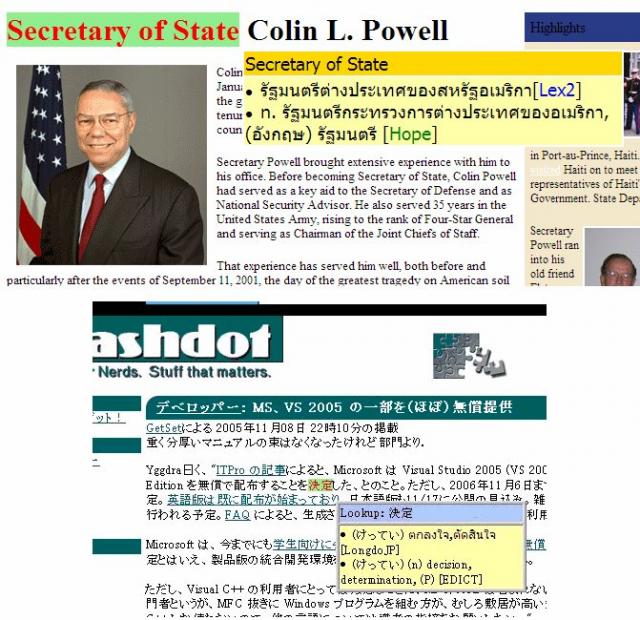
 Move your mouse over the text to see pop-up windows.


(Yīng) (zhǔ)


  • (えい) (n,n-pref,n-suf) (abbr) (See 英吉利・イギリス,英国・えいこく) Britain; British [EDICT]
  • (Yīng, ㄧㄥ) English; brave; surname Ying [CE-DICT]
  • (しゅ(P);しゅう(ok)) (n,adj-no) (1) (one's) master; (2) (しゅ only) Lord (Christian ref. to Jesus or God); (3) (しゅ only) (See 主たる,主として) the main thing; the majority; the primary concern; (P) [EDICT]
  • (にし;のし) (pn) (arch) (fam) (See 主・ぬし・6) you [EDICT]
  • (ぬし) (n) (1) head (of a household, etc.); leader; master; (2) owner; proprietor; proprietress; (3) subject (of a rumour, etc.); doer (of a deed); (4) guardian spirit (e.g. long-resident beast, usu. with mystical powers); long-time resident (or employee, etc.); (5) husband; (pn) (6) (fam) (See おぬし) you; (P) [EDICT]
  • (おも) (adj-na,n) (1) (See 主な,主に) chief; main; principal; important; (2) (abbr) (usu. written as オモ) (See 重あど) main secondary or supporting role (in kyogen); (P) [EDICT]
  • (す) (suf) (arch) (hon) honorific (or familiar) suffix used after a name [EDICT]
  • (あるじ) (n) (1) (abbr) head (of a household); proprietor (of a store); proprietress; landlord; landlady; master (of a servant); (2) (arch) (also written as 饗) (See 饗設け) entertaining someone as one's guest [EDICT]
  • (zhǔ, ㄓㄨˇ) to own; to host; master; lord; primary [CE-DICT]


Search other online dictionaries

English/Thai Dictionary
Thai Dictionary and related
English/Thai Dictionary Software Application
English/English Dictionary
 

Japanese Dictionary
German and German/English Dictionaries
Other translation and dictionary websites
Other interesting resources

Do you know the meaning of this word?

You can Suggest your own translation to Longdo

Discussions

About our ads
We know you don’t love ads. But we need ads to keep Longdo Dictionary FREE for users. Thanks for your understanding! Click here to find out more.
Go to Top