สรุปรวม “เครื่องหมายวรรคตอน” (Punctuation): ฮีโร่ผู้อยู่เบื้องหลังทุกตัวอักษร ลองจินตนาการว่าคุณกำลังอ่านบทความภาษาอังกฤษอยู่โดยที่ไม่มีช่องว่างไม่มีเครื่องหมายคำถามไม่มีจุดฟูลสต็อปและไม่มีอะไรเลยคุณคงจะรู้สึกอึดอัดและหมดแรงตั้งแต่สามประโยคแรกใช่ไหมคะ? นี่คือเหตุผลที่ เครื่องหมายวรรคตอน (Punctuation) ถูกคิดค้นขึ้นมา พวกมันไม่ได้เป็นแค่สัญลักษณ์แปลกๆ ที่ถูกสาดลงบนหน้ากระดาษ แต่เป็นเหมือน “ป้ายจราจร” ในโลกของภาษาที่คอยบอกคนอ่านว่าควรหยุดตอนไหน ควรเว้นหายใจเมื่อไหร่ และควรใส่อารมณ์กับประโยคนั้นอย่างไร เมื่อเครื่องหมายเปลี่ยน ชีวิตก็เปลี่ยน ความทรงพลังของเครื่องหมายวรรคตอนเห็นได้ชัดที่สุดผ่านตำแหน่งของมัน บ่อยครั้งที่การวางเครื่องหมายผิดที่ สามารถเปลี่ยนความหมายจากหน้ามือเป็นหลังมือ หรืออาจถึงขั้น “เปลี่ยนชีวิต” ได้เลยทีเดียว ลองดูตัวอย่างคลาสสิกในภาษาอังกฤษนี้: แบบที่...
อ่านผิดไม่ใช่เรื่องแปลก! คำว่า “Odyssey” หนังเรื่องดัง จริงๆ อ่านว่าอะไรกันแน่? 🎬✨ ช่วงนี้ใครๆ ก็พูดถึงภาพยนตร์เรื่องใหม่อย่าง “Odyssey” หนังมหากาพย์ระดับโลกที่สร้างจากมหากาพย์ของ Odysseus เรื่องราวการผจญภัยเดินทางกลับบ้านอันยาวนาน แต่ก่อนจะชวนเพื่อนไปดูหนัง ลองเช็กกันหน่อยว่าคุณกำลังออกเสียงชื่อหนังเรื่องนี้ถูกต้องอยู่หรือเปล่า? 💡 แล้ว “Odyssey” ที่ถูกต้องอ่านว่าอะไร? คำนี้ออกเสียงที่ถูกต้องว่า “ออ-เดอะ-สี่” (/ˈɑː.də.si/) ✅ โดยเน้นลงเสียงหนัก (Stress) ที่พยางค์แรก “ออ” ทำไมคนส่วนใหญ่ถึงอ่านผิดเป็น “โอดิสซี่”? ถ้ารู้จักหลักการออกเสียง 3 ข้อนี้ แล้วจะเก็ททันทีว่าทำไมเราถึงหลงอ่านผิดกันมาตั้งนาน: 🌊...
ประโยคภาษาอังกฤษใช้บ่อยในที่ทำงาน คุณเคยเจอสถานการณ์นี้ไหม? เวลาคุยภาษาอังกฤษกับเพื่อนร่วมงานหรือชาวต่างชาติ แล้วอยากจะบอกว่า “ฉันเข้าใจที่คุณพูดนะ” แต่ในหัวกลับคิดออกอยู่ประโยคเดียวคือ “I understand” การสื่อสารที่มีเสน่ห์และดูเป็นธรรมชาติเหมือนเจ้าของภาษา (Idiomatic expressions) มักจะผสมผสานระหว่าง Simple Sentences (ประโยคความเดียวที่กระชับ ตรงประเด็น) และ Idioms หรือ Slang (สำนวนที่สละสลวย) เข้าด้วยกัน วันนี้เรามาดูตัวอย่างประโยคที่ใช้บ่อยในการทำงานและชีวิตประจำวัน เพื่ออัปเกรดภาษาอังกฤษของคุณให้ดูโปรและเป็นธรรมชาติมากขึ้น 1. หมวด: “ฉันเข้าใจสิ่งที่คุณต้องการจะสื่อ” เวลาต้องการแสดงความเข้าอกเข้าใจ หรือบอกว่าเราตามความคิดของอีกฝ่ายทัน...
ผลลัพธ์การค้นหาสำหรับ

只の人

   
ภาษา
Dictionaries languages

English Phonetic Symbols


Chinese Phonetic Symbols


ลองค้นหาคำในรูปแบบอื่น ๆ เพื่อให้ได้ผลลัพธ์มากขึ้นหรือน้อยลง: -只の人-, *只の人*
มีผลลัพธ์ที่ไม่แสดงผลอยู่
ปรับการตั้งค่า
Dictionaries languages

English Phonetic Symbols


Chinese Phonetic Symbols


Japanese-English: EDICT Dictionary
只の人[ただのひと, tadanohito] (n) man in the street; common (ordinary) person [Add to Longdo]

ตัวอย่างประโยค จาก Open Subtitles  **ระวัง คำแปลอาจมีข้อผิดพลาด**
- It was Stannis. - Stannis is my king, but he's only a man.[JP] - スタニスは私の王だが 只の人間だ Blackwater (2012)

เพิ่มคำศัพท์


ทราบความหมายของคำศัพท์นี้? กด [เพิ่มคำศัพท์] เพื่อใส่คำนี้พร้อมความหมาย เพื่อเป็นวิทยาทานแก่ผู้ใช้ท่านอื่น ๆ


ติดโพย (PopThai)
 วางเมาส์ที่คำศัพท์เพื่อแสดงป๊อปอัป


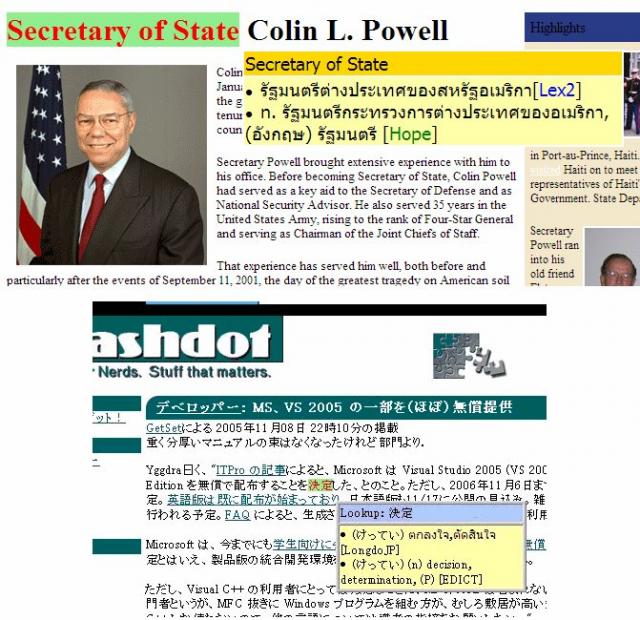
(ただ)(ひと)


  • (ただ) (adj-no) (1) (uk) ordinary; common; usual; (2) (esp. 只) free of charge; (3) (usu. as ただでは...) unaffected; as is; safe; (adv) (4) only; merely; just; simply; (5) (esp. 但) but; however; nevertheless; (P) [EDICT]
  • (zhǐ, ㄓˇ) only; merely; just; but [CE-DICT]
  • (zhǐ, ㄓˇ) but; only [CE-DICT]
  • (zhī, ) classifier for birds and certain animals, one of a pair, some utensils, vessels etc [CE-DICT]
  • () (prt) endorsing and questioning the preceding statement (sentence ending particle); lamenting reflections on the preceding statement (sentence ending particle) [EDICT]
  • () (prt) (1) although; when; and yet; despite this; in spite of; even though; but even so; but even then; however; nevertheless; for all that; notwithstanding that; (2) while; (3) if only; I wish; (4) I tell you; you should do; (5) in order to; (P) [EDICT]
  • () (suf,prt) (literary equiv. of だけ) only; nothing but; (P) [EDICT]
  • () (n) (See スラグ) slag [EDICT]
  • (乃) (prt) (1) (uk) (occasionally ん) indicates possessive; (2) verb and adjective nominalizer (nominaliser); (3) substituting for "ga" in subordinate phrases; (4) (often ん) indicates a confident conclusion; (5) emotional emphasis (sentence end) (fem); (6) indicates question (sentence end); (P) [EDICT]
  • (之) (prt) (arch) possessive (used on tombs, etc.) [EDICT]
  • (幅) (n,n-suf,ctr) (after a number in the hito-, futa-, mi- counting system) unit of measurement for cloth breadth (30-38 cm) [EDICT]
  • (布) (n,n-suf,ctr) (after a number in the hito-, futa-, mi- counting system) unit of measurement for cloth breadth (30-38 cm) [EDICT]
  • (箆) (n) (1) (arch) shaft (of an arrow); (2) (arch) (See 矢竹・2) arrow bamboo (Pseudosasa japonica) [EDICT]
  • (篦) (n) (1) (arch) shaft (of an arrow); (2) (arch) (See 矢竹・2) arrow bamboo (Pseudosasa japonica) [EDICT]
  • (じん) (suf) (1) -ian (e.g. Italian, etc.) (attaches to name of country to denote nationality); -er (e.g. performer, etc.) (attaches to name of occupation); (2) (usu. in compound words) man; person; people; (P) [EDICT]
  • (と) (suf) person [EDICT]
  • (にん(P);たり;り) (ctr) (1) counter for people; (n) (2) (にん only) (usu. in compound words) person; (P) [EDICT]
  • (ひと) (n) (1) man; person; (2) human being; mankind; people; (3) character; personality; (4) man of talent; true man; (5) other people; (6) adult; (P) [EDICT]
  • (rén, ㄖㄣˊ) man; person; people [CE-DICT]


Search other online dictionaries

English/Thai Dictionary
Thai Dictionary and related
English/Thai Dictionary Software Application
English/English Dictionary
 

Japanese Dictionary
German and German/English Dictionaries
Other translation and dictionary websites
Other interesting resources

Do you know the meaning of this word?

You can Suggest your own translation to Longdo

Discussions

ว่าด้วยโฆษณา
เราทราบดีว่าท่านผู้ใช้คงไม่ได้อยากให้มีโฆษณาเท่าใดนัก แต่โฆษณาช่วยให้ทาง Longdo เรามีรายรับเพียงพอที่จะให้บริการพจนานุกรมได้แบบฟรีๆ ต่อไป ดูรายละเอียดเพิ่มเติม
Go to Top