[にがていしき, nigateishiki] (n) awareness that somebody (something) is (will be) hard to deal with; awareness that one is not good at something [Add to Longdo]
You know the meaning of this word? click [add this word] to add this word to our database with its meaning, to impart your knowledge for the general benefit
ติดโพย (PopThai)
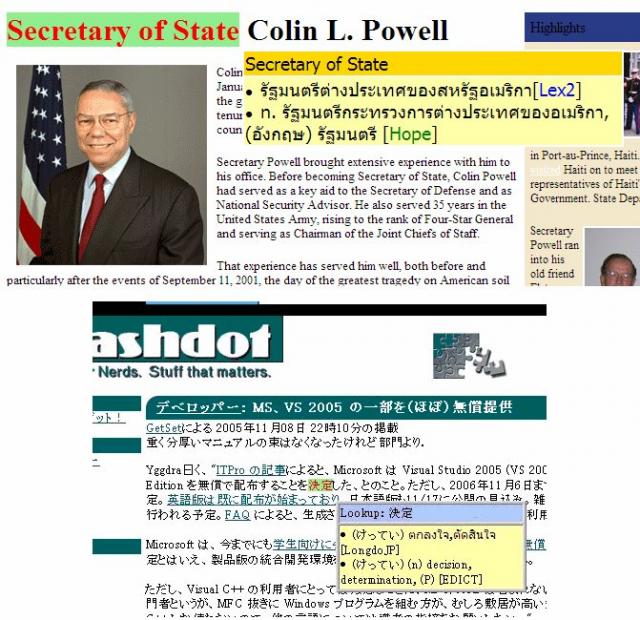
Move your mouse over the text to see pop-up windows.
(て) (n) (1) (occ. pronounced た when a prefix) (See お手・おて・1) hand; arm; (2) (col) (See お手・おて・3) forepaw; foreleg; (3) handle; (4) hand; worker; help; (5) trouble; care; effort; (6) means; way; trick; move; technique; workmanship; (7) hand; handwriting; (8) kind; type; sort; (9) (See 手に入る) one's hands; one's possession; (10) (See 手に余る) ability to cope; (11) hand (of cards); (12) (See 山の手・1) direction; (P) [EDICT]
(shǒu, ㄕㄡˇ) hand; (formal) to hold; person engaged in certain types of work; person skilled in certain types of work; personal(ly); convenient [CE-DICT]
意
(い) (n) (1) feelings; thoughts; (2) meaning [EDICT]
(yì, ㄧˋ) idea; meaning; thought; to think; wish; desire; intention; to expect; to anticipate; abbr. for Italy 意大利 [CE-DICT]
識
(しき) (n) (1) {Buddh} acquaintanceship; (2) vijnana (consciousness); (3) (after a signature) written by... [EDICT]
(shí, ㄕˊ) to know; knowledge; Taiwan pr. shi4 [CE-DICT]
แสดงได้ทั้งความหมายของคำเดี่ยว และคำผสม ได้อย่างถูกต้อง
เช่น Secretary of State=รัฐมนตรีต่างประเทศของสหรัฐฯ (ในภาพตัวอย่าง),
High school=โรงเรียนมัธยมปลาย