ประโยคภาษาอังกฤษใช้บ่อยในที่ทำงาน คุณเคยเจอสถานการณ์นี้ไหม? เวลาคุยภาษาอังกฤษกับเพื่อนร่วมงานหรือชาวต่างชาติ แล้วอยากจะบอกว่า “ฉันเข้าใจที่คุณพูดนะ” แต่ในหัวกลับคิดออกอยู่ประโยคเดียวคือ “I understand” การสื่อสารที่มีเสน่ห์และดูเป็นธรรมชาติเหมือนเจ้าของภาษา (Idiomatic expressions) มักจะผสมผสานระหว่าง Simple Sentences (ประโยคความเดียวที่กระชับ ตรงประเด็น) และ Idioms หรือ Slang (สำนวนที่สละสลวย) เข้าด้วยกัน วันนี้เรามาดูตัวอย่างประโยคที่ใช้บ่อยในการทำงานและชีวิตประจำวัน เพื่ออัปเกรดภาษาอังกฤษของคุณให้ดูโปรและเป็นธรรมชาติมากขึ้น 1. หมวด: “ฉันเข้าใจสิ่งที่คุณต้องการจะสื่อ” เวลาต้องการแสดงความเข้าอกเข้าใจ หรือบอกว่าเราตามความคิดของอีกฝ่ายทัน...
สรุปรวม “เครื่องหมายวรรคตอน” (Punctuation): ฮีโร่ผู้อยู่เบื้องหลังทุกตัวอักษร ลองจินตนาการว่าคุณกำลังอ่านบทความภาษาอังกฤษอยู่โดยที่ไม่มีช่องว่างไม่มีเครื่องหมายคำถามไม่มีจุดฟูลสต็อปและไม่มีอะไรเลยคุณคงจะรู้สึกอึดอัดและหมดแรงตั้งแต่สามประโยคแรกใช่ไหมคะ? นี่คือเหตุผลที่ เครื่องหมายวรรคตอน (Punctuation) ถูกคิดค้นขึ้นมา พวกมันไม่ได้เป็นแค่สัญลักษณ์แปลกๆ ที่ถูกสาดลงบนหน้ากระดาษ แต่เป็นเหมือน “ป้ายจราจร” ในโลกของภาษาที่คอยบอกคนอ่านว่าควรหยุดตอนไหน ควรเว้นหายใจเมื่อไหร่ และควรใส่อารมณ์กับประโยคนั้นอย่างไร เมื่อเครื่องหมายเปลี่ยน ชีวิตก็เปลี่ยน ความทรงพลังของเครื่องหมายวรรคตอนเห็นได้ชัดที่สุดผ่านตำแหน่งของมัน บ่อยครั้งที่การวางเครื่องหมายผิดที่ สามารถเปลี่ยนความหมายจากหน้ามือเป็นหลังมือ หรืออาจถึงขั้น “เปลี่ยนชีวิต” ได้เลยทีเดียว ลองดูตัวอย่างคลาสสิกในภาษาอังกฤษนี้: แบบที่...
อ่านผิดไม่ใช่เรื่องแปลก! คำว่า “Odyssey” หนังเรื่องดัง จริงๆ อ่านว่าอะไรกันแน่? 🎬✨ ช่วงนี้ใครๆ ก็พูดถึงภาพยนตร์เรื่องใหม่อย่าง “Odyssey” หนังมหากาพย์ระดับโลกที่สร้างจากมหากาพย์ของ Odysseus เรื่องราวการผจญภัยเดินทางกลับบ้านอันยาวนาน แต่ก่อนจะชวนเพื่อนไปดูหนัง ลองเช็กกันหน่อยว่าคุณกำลังออกเสียงชื่อหนังเรื่องนี้ถูกต้องอยู่หรือเปล่า? 💡 แล้ว “Odyssey” ที่ถูกต้องอ่านว่าอะไร? คำนี้ออกเสียงที่ถูกต้องว่า “ออ-เดอะ-สี่” (/ˈɑː.də.si/) ✅ โดยเน้นลงเสียงหนัก (Stress) ที่พยางค์แรก “ออ” ทำไมคนส่วนใหญ่ถึงอ่านผิดเป็น “โอดิสซี่”? ถ้ารู้จักหลักการออกเสียง 3 ข้อนี้ แล้วจะเก็ททันทีว่าทำไมเราถึงหลงอ่านผิดกันมาตั้งนาน: 🌊...
Search result for

積不善の家には必ず余殃あり

   
Languages
Dictionaries languages


Chinese Phonetic Symbols


ลองค้นหาคำในรูปแบบอื่น ๆ เพื่อให้ได้ผลลัพธ์มากขึ้นหรือน้อยลง: -積不善の家には必ず余殃あり-, *積不善の家には必ず余殃あり*
Some results are hidden.
configure
Dictionaries languages


Chinese Phonetic Symbols


Japanese-English: EDICT Dictionary
積不善の家には必ず余殃あり;積不善の家には必ず余殃有り[せきふぜんのいえにはかならずよおうあり, sekifuzennoienihakanarazuyoouari] (exp) (arch) (See 積善の家には必ず余慶あり) iniquities of fathers are visited upon their sons [Add to Longdo]

add this word


You know the meaning of this word? click [add this word] to add this word to our database with its meaning, to impart your knowledge for the general benefit


ติดโพย (PopThai)
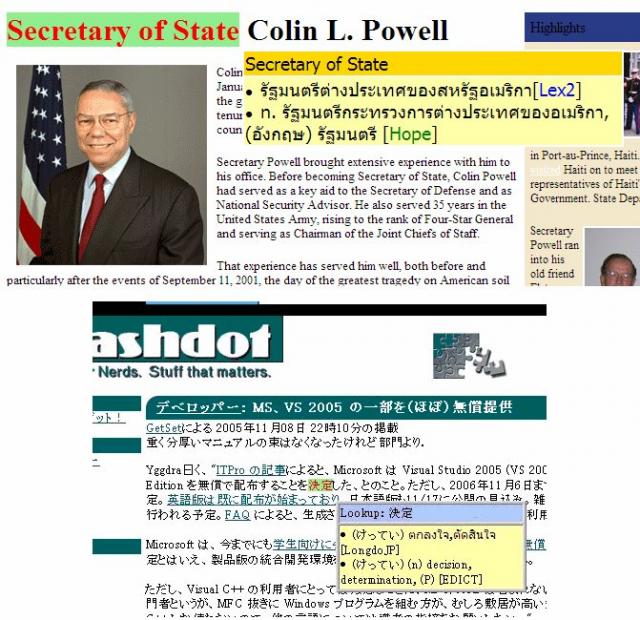
 Move your mouse over the text to see pop-up windows.


(つむ)不善(ふぜん)(いえ)必ず(かならず)()あり


  • (せき) (n) (1) {math} (See 商・1) product; (2) (See 体積,面積) volume; area; (P) [EDICT]
  • (jī, ㄐㄧ) to amass; to accumulate; to store; measured quantity (such as area of volume); product (the result of multiplication); to integrate (math.); to solve (or integrate) an ordinary differential equation (math.); old; long-standing [CE-DICT]
不善
  • (ふぜん) (n) evil; sin; vice; mischief [EDICT]
  • (bù shàn, ㄅㄨˋ ㄕㄢˋ) bad; ill; not good at; not to be pooh-poohed; quite impressive [CE-DICT]
  • () (prt) endorsing and questioning the preceding statement (sentence ending particle); lamenting reflections on the preceding statement (sentence ending particle) [EDICT]
  • () (prt) (1) although; when; and yet; despite this; in spite of; even though; but even so; but even then; however; nevertheless; for all that; notwithstanding that; (2) while; (3) if only; I wish; (4) I tell you; you should do; (5) in order to; (P) [EDICT]
  • () (suf,prt) (literary equiv. of だけ) only; nothing but; (P) [EDICT]
  • () (n) (See スラグ) slag [EDICT]
  • (乃) (prt) (1) (uk) (occasionally ん) indicates possessive; (2) verb and adjective nominalizer (nominaliser); (3) substituting for "ga" in subordinate phrases; (4) (often ん) indicates a confident conclusion; (5) emotional emphasis (sentence end) (fem); (6) indicates question (sentence end); (P) [EDICT]
  • (之) (prt) (arch) possessive (used on tombs, etc.) [EDICT]
  • (幅) (n,n-suf,ctr) (after a number in the hito-, futa-, mi- counting system) unit of measurement for cloth breadth (30-38 cm) [EDICT]
  • (布) (n,n-suf,ctr) (after a number in the hito-, futa-, mi- counting system) unit of measurement for cloth breadth (30-38 cm) [EDICT]
  • (箆) (n) (1) (arch) shaft (of an arrow); (2) (arch) (See 矢竹・2) arrow bamboo (Pseudosasa japonica) [EDICT]
  • (篦) (n) (1) (arch) shaft (of an arrow); (2) (arch) (See 矢竹・2) arrow bamboo (Pseudosasa japonica) [EDICT]
  • (いえ) บ้าน [LongdoJP]
  • (や) (suf) (1) (usu. 屋) (See パン屋) (something) shop; (2) (usu. 屋, can be derog.) (See 殺し屋) somebody who sells (something) or works as (something); (3) (usu. 屋) (See 照れ屋) somebody with a (certain) personality trait; (n) (4) (usu. 家) house; (5) roof [EDICT]
  • (いえ) (n) (1) house; residence; dwelling; (2) family; household; (3) lineage; family name; (P) [EDICT]
  • (うち(P);ち) (n,adj-no) (1) house; home (one's own); (pn,adj-no) (2) (See 内・うち・4) (one's) family; (one's) household; (P) [EDICT]
  • (か) (suf) (See 政治家) -ist (used after a noun indicating someone's occupation, pursuits, disposition, etc.); -er [EDICT]
  • (け) (suf) house (e.g. of Tokugawa); family; (P) [EDICT]
  • (んち) (suf,exp) (uk) (abbr) (from 〜のうち) (See 家・ち・1) 's house; 's home [EDICT]
  • (jiā, ㄐㄧㄚ) furniture; tool [CE-DICT]
  • (jiā, ㄐㄧㄚ) home; family; classifier for families or businesses; refers to the philosophical schools of pre-Han China; noun suffix for specialists in some activity such as musician or revolutionary, corresponds to English -ist, -er, -ary or -ian; surname Jia [CE-DICT]
  • (二) สอง [LongdoJP]
  • () (prt) indicates location of action (formal literary form of "de"); at; in; (P) [EDICT]
  • () (prt) (See に,は) for (in regard to); in order to [EDICT]
  • () (exp) also; too; not ... either; as well; even [EDICT]
  • () (exp) (1) (also にゃあ) (See ねば) if not ... (negative conditional); (2) (See には) for (in regard to); in order to [EDICT]
  • (荷) (n) (1) load; baggage; cargo; freight; goods; (2) burden; responsibility; (P) [EDICT]
  • (似) (suf) takes after (his mother) [EDICT]
  • (丹) (n) red earth (i.e. containing cinnabar or minium); vermilion; (P) [EDICT]
  • (土) (n) (arch) soil (esp. reddish soil) [EDICT]
  • (尼) (n,n-suf) (abbr) (See 比丘尼) bhikkhuni (fully ordained Buddhist nun) [EDICT]
  • (弐) (num) two (used in legal documents) [EDICT]
  • (葉) ใบไม้ [LongdoJP]
  • () (int) (1) (pol) yes; (2) OK (used to get attention prior to an utterance); okay; (3) giddy-up; giddap; (P) [EDICT]
  • () (v5r,aux-v,suf) (hon) (ksb [EDICT]
  • () (suf) (ksb [EDICT]
  • (歯) (n) tooth; (P) [EDICT]
  • (刃) (n) edge (of a knife or sword); (P) [EDICT]
  • (派) (n,n-suf) clique; faction; school; (P) [EDICT]
  • (破) (n) (See 序破急) (in gagaku or noh) middle section of a song [EDICT]
  • (葉) (n) leaf; (P) [EDICT]
必ず
  • (かならず) (adv) always; without exception; necessarily; certainly; without fail; positively; invariably; (P) [EDICT]
  • (よ) (n,suf) (1) (余 only) (also written as 餘) (See 以上・1) over; more than; (pn,adj-no) (2) (arch) formal or oratory first person pronoun; I [EDICT]
  • (yú, ㄩˊ) extra; surplus; remaining; remainder after division; (following numerical value) or more; in excess of (some number); residue (math.); after; I; me; surname Yu [CE-DICT]
  • (yāng, ㄧㄤ) calamity [CE-DICT]
あり
  • (蟻) มด [LongdoJP]
  • () (suf,adj-no) based on; originating from [EDICT]
  • (蟻) (n) ant; (P) [EDICT]
  • (在り) (n,adj-no) (uk) (See 在る・ある・1) existence (at the present moment) [EDICT]
  • (有り) (n,adj-no) (uk) (See 在る・ある・1) existence (at the present moment) [EDICT]


Search other online dictionaries

English/Thai Dictionary
Thai Dictionary and related
English/Thai Dictionary Software Application
English/English Dictionary
 

Japanese Dictionary
German and German/English Dictionaries
Other translation and dictionary websites
Other interesting resources

Do you know the meaning of this word?

You can Suggest your own translation to Longdo

Discussions

About our ads
We know you don’t love ads. But we need ads to keep Longdo Dictionary FREE for users. Thanks for your understanding! Click here to find out more.
Go to Top