Today’s Lesson: เมคอัพสไตล์ “ปรุงจืด” ในภาษาอังกฤษ ถ้าพูดถึงเทรนด์บิวตี้ที่มาแรงและยืนหนึ่งในใจใครหลายคนตอนนี้ คงหนีไม่พ้นการแต่งหน้าโทนละมุน ๆ นวล ๆ หรือที่ชาวเน็ตไทยเรียกกันอย่างเอ็นดูว่า “แต่งหน้าแบบปรุงจืด”  คำว่า ปรุงจืด ในที่นี้ไม่ได้แปลว่าจืดชืดไร้มิติ แต่หมายถึงการแต่งหน้าเน้นความสวยแบบธรรมชาติ ไม่เน้นสีสันที่ฉูดฉาด ไม่คัดเบ้าตาแน่น หรือ กรีดอายไลเนอร์คมกริบ แต่เป็นการ “แต่งเหมือนไม่ได้แต่ง” ที่ดูแพงและสบายตา แล้วถ้าเราอยากจะอธิบายลุคนี้เป็นภาษาอังกฤษล่ะ? จะใช้คำว่าอะไรให้ตรงเรฟและอินเทรนด์ที่สุด วันนี้เราสรุปมาให้แล้ว 3 คีย์เวิร์ดภาษาอังกฤษของสาว...
สรุปรวม “เครื่องหมายวรรคตอน” (Punctuation): ฮีโร่ผู้อยู่เบื้องหลังทุกตัวอักษร ลองจินตนาการว่าคุณกำลังอ่านบทความภาษาอังกฤษอยู่โดยที่ไม่มีช่องว่างไม่มีเครื่องหมายคำถามไม่มีจุดฟูลสต็อปและไม่มีอะไรเลยคุณคงจะรู้สึกอึดอัดและหมดแรงตั้งแต่สามประโยคแรกใช่ไหมคะ? นี่คือเหตุผลที่ เครื่องหมายวรรคตอน (Punctuation) ถูกคิดค้นขึ้นมา พวกมันไม่ได้เป็นแค่สัญลักษณ์แปลกๆ ที่ถูกสาดลงบนหน้ากระดาษ แต่เป็นเหมือน “ป้ายจราจร” ในโลกของภาษาที่คอยบอกคนอ่านว่าควรหยุดตอนไหน ควรเว้นหายใจเมื่อไหร่ และควรใส่อารมณ์กับประโยคนั้นอย่างไร เมื่อเครื่องหมายเปลี่ยน ชีวิตก็เปลี่ยน ความทรงพลังของเครื่องหมายวรรคตอนเห็นได้ชัดที่สุดผ่านตำแหน่งของมัน บ่อยครั้งที่การวางเครื่องหมายผิดที่ สามารถเปลี่ยนความหมายจากหน้ามือเป็นหลังมือ หรืออาจถึงขั้น “เปลี่ยนชีวิต” ได้เลยทีเดียว ลองดูตัวอย่างคลาสสิกในภาษาอังกฤษนี้: แบบที่...
อัปสกิลอินเตอร์! ด้วย “สำนวนสัตว์โลก” (Animal Idioms) สุดคิ้วท์ที่ฝรั่งใช้บ่อยมาก เคยไหมคะ? เวลานั่งดูซีรีส์เรื่องโปรด หรือคุยกับเพื่อนต่างชาติ แล้วอยู่ ๆ เขาก็พูดคำว่า “ฝนตกเป็นแมวเป็นหมา” หรือ “มีผีเสื้ออยู่ในท้อง” ขึ้นมาเสียดื้อ ๆ จนเราแอบเอ๊ะในใจว่า “ห๊ะ? แปลว่าอะไรนะ?” เพราะถ้าแปลตรงตัวเนี่ย บอกเลยว่ามึนตึ้บแน่นอนค่ะ! ในภาษาอังกฤษมีสิ่งที่เรียกว่า Idioms (สำนวน) อยู่เยอะมาก ๆ ค่ะ และหนึ่งในหมวดที่ฮิตแถมยังน่ารักสุด ๆ ก็คือ “สำนวนเกี่ยวกับสัตว์” เพราะคนสมัยก่อนมักจะหยิบยกพฤติกรรมของเจ้าพวกสี่ขาหรือสัตว์รอบตัวมาเปรียบเปรยกับนิสัยของมนุษย์ วันนี้เราจะพาทุกคนไปอัปคลังคำศัพท์กับสำนวนสัตว์โลกสุดฮิตที่รู้ไว้ ได้ใช้ในชีวิตประจำวันแน่นอนค่ะ! 🐶...
ประโยคภาษาอังกฤษใช้บ่อยในที่ทำงาน คุณเคยเจอสถานการณ์นี้ไหม? เวลาคุยภาษาอังกฤษกับเพื่อนร่วมงานหรือชาวต่างชาติ แล้วอยากจะบอกว่า “ฉันเข้าใจที่คุณพูดนะ” แต่ในหัวกลับคิดออกอยู่ประโยคเดียวคือ “I understand” การสื่อสารที่มีเสน่ห์และดูเป็นธรรมชาติเหมือนเจ้าของภาษา (Idiomatic expressions) มักจะผสมผสานระหว่าง Simple Sentences (ประโยคความเดียวที่กระชับ ตรงประเด็น) และ Idioms หรือ Slang (สำนวนที่สละสลวย) เข้าด้วยกัน วันนี้เรามาดูตัวอย่างประโยคที่ใช้บ่อยในการทำงานและชีวิตประจำวัน เพื่ออัปเกรดภาษาอังกฤษของคุณให้ดูโปรและเป็นธรรมชาติมากขึ้น 1. หมวด: “ฉันเข้าใจสิ่งที่คุณต้องการจะสื่อ” เวลาต้องการแสดงความเข้าอกเข้าใจ หรือบอกว่าเราตามความคิดของอีกฝ่ายทัน...
Search result for

知った事ではない

   
Languages
Dictionaries languages


Chinese Phonetic Symbols


ลองค้นหาคำในรูปแบบอื่น ๆ เพื่อให้ได้ผลลัพธ์มากขึ้นหรือน้อยลง: -知った事ではない-, *知った事ではない*
Some results are hidden.
configure
Dictionaries languages


Chinese Phonetic Symbols


ตัวอย่างประโยค จาก Open Subtitles  **ระวัง คำแปลอาจมีข้อผิดพลาด**
- Look. They're not our responsibility.[JP] - オレ達の知った事ではない Into the Storm (2014)
I don't care how.[JP] 知った事ではない Judge, Jury, Executioner (2012)
This is none of your business.[JP] 言う事を聞くんだ! 知った事ではない お前等は任務を果たし Frankenstein's Army (2013)

add this word


You know the meaning of this word? click [add this word] to add this word to our database with its meaning, to impart your knowledge for the general benefit


ติดโพย (PopThai)
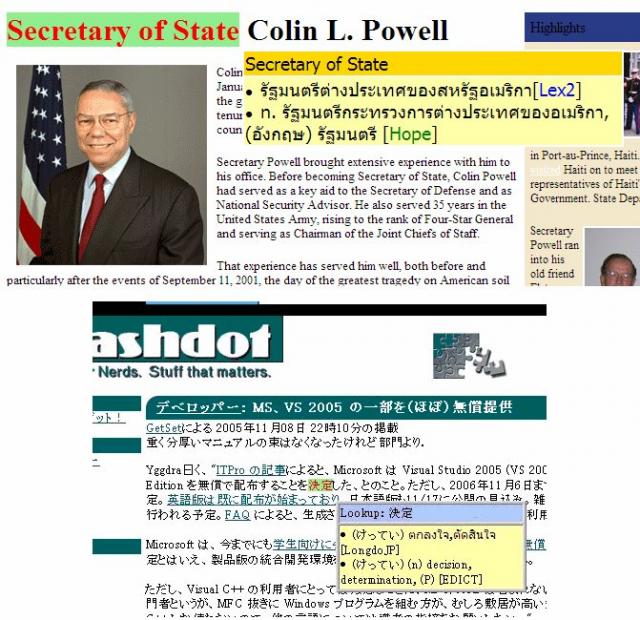
 Move your mouse over the text to see pop-up windows.


知っ(しっ)(こと)ない


知る
  • (しる) (v5r,vt) to know; to understand; to be acquainted with; to feel; (P) [EDICT]
  • () (aux-adj) (1) (after the -masu stem of a verb) want to ... do something; would like to ...; (prt) (2) (kyu [EDICT]
  • () (exp) (abbr of ...ていたの) (See 乃・の・5,わ) (usu. sentence end) indicates emotion, admiration, emphasis, etc. [EDICT]
  • () (aux-v) (after a noun, usu. as 〜たる者, etc.) (See たり,たるや) (those) who are; (that) which is; often used in relation to qualifications and requirements for a position; in the capacity of [EDICT]
  • () (suf) (m-sl) (fam) (fem) (See ちゃん) (cute) suffix for familiar person [EDICT]
  • (他) (n-adv,n,adj-no) other (esp. people and abstract matters); (P) [EDICT]
  • (多) (n,pref) multi-; (P) [EDICT]
  • (田) (n) rice field; (P) [EDICT]
  • (こと(P);こん) (n) (1) thing; matter; (2) incident; occurrence; event; something serious; trouble; crisis; (3) circumstances; situation; state of affairs; (4) work; business; affair; (5) after an inflectable word, creates a noun phrase indicating something the speaker does not feel close to; (n-suf) (6) (See 事・ごと・1) nominalizing suffix; (7) (See 事・ごと・2) pretending to ...; playing make-believe ...; (P) [EDICT]
  • (ごと) (suf) (1) (See 事・こと・6) nominalizing suffix; (2) (See 事・こと・7) pretending to ...; playing make-believe ... [EDICT]
  • (じ) (n) {Buddh} (See 理・2) individual concrete phenomenon (as opposed to a general principle) [EDICT]
  • (shì, ㄕˋ) matter; thing; item; work; affair [CE-DICT]
  • () (prt) (1) (as …たり…たり, after the ren'youkei forms of multiple verbs) -ing and -ing (e.g. "coming and going"); (2) (used adverbially) doing such things as...; (3) (as …たり…たり at sentence-end, after the ren'youkei forms of a repeated verb) expresses a command; (aux-v) (4) (たり only) (arch) (from とあり) (See たる) (after a noun) to be; (5) (たり only) (arch) (from 〜てあり, after the ren'youkei form of a verb) indicates completion or continuation of an action; (P) [EDICT]
  • () (prt) (1) (fam) marks wh-question (what, where, who); (2) (chn) strengthens one's judgment or conclusion; (P) [EDICT]
  • () (exp) if it's the case; (P) [EDICT]
  • () (prt) even [EDICT]
  • () (suf,prt) and; or; and the like; and so forth; and what not; (P) [EDICT]
  • () (exp) (1) (See でしょう) seems; I think; I guess; I wonder; I hope; (2) don't you agree?; I thought you'd say that!; (P) [EDICT]
  • () (n) (col) (abbr) (See 友達) friend [EDICT]
  • () (n) undercut (of a machined edge) [EDICT]
  • (駄) (pref) (1) (See 駄文・1) poor; low-grade; trivial; insignificant; worthless; (n-suf,ctr) (2) (See 一駄) load; pack; horse load; (n) (3) packhorse [EDICT]
  • (兌) (n) dui (one of the trigrams of the I Ching [EDICT]
  • (葉) ใบไม้ [LongdoJP]
  • () (int) (1) (pol) yes; (2) OK (used to get attention prior to an utterance); okay; (3) giddy-up; giddap; (P) [EDICT]
  • () (v5r,aux-v,suf) (hon) (ksb [EDICT]
  • () (suf) (ksb [EDICT]
  • (歯) (n) tooth; (P) [EDICT]
  • (刃) (n) edge (of a knife or sword); (P) [EDICT]
  • (派) (n,n-suf) clique; faction; school; (P) [EDICT]
  • (破) (n) (See 序破急) (in gagaku or noh) middle section of a song [EDICT]
  • (葉) (n) leaf; (P) [EDICT]
ない
  • () (exp) (1) (See ませんか) (used to ask a question in the negative) won't (hasn't, isn't, doesn't, etc.); (2) (used to make invitations, express desires or give indirect commands) won't you [EDICT]
  • () (conj,aux) (1) (See ない) without doing ...; (aux) (2) used in sentence-final position as an indirect prohibition [EDICT]
  • (内) (suf) inside; within [EDICT]
  • (亡い) (adj-i) (See 無い) dead [EDICT]
  • (無い) (adj-i) (1) (uk) (See 亡い) nonexistent; not being (there); (2) unpossessed; unowned; not had; (3) (See またとない) unique; (4) (as ...ことがない, etc.) indicates negation, inexperience, unnecessariness or impossibility; (aux-adj) (5) (See ない) (after the ren'youkei form of an adjective) not ...; (6) (after the -te form of a verb) to not be...; to have not ...; (P) [EDICT]


Search other online dictionaries

English/Thai Dictionary
Thai Dictionary and related
English/Thai Dictionary Software Application
English/English Dictionary
 

Japanese Dictionary
German and German/English Dictionaries
Other translation and dictionary websites
Other interesting resources

Do you know the meaning of this word?

You can Suggest your own translation to Longdo

Discussions

About our ads
We know you don’t love ads. But we need ads to keep Longdo Dictionary FREE for users. Thanks for your understanding! Click here to find out more.
Go to Top