ประโยคภาษาอังกฤษใช้บ่อยในที่ทำงาน คุณเคยเจอสถานการณ์นี้ไหม? เวลาคุยภาษาอังกฤษกับเพื่อนร่วมงานหรือชาวต่างชาติ แล้วอยากจะบอกว่า “ฉันเข้าใจที่คุณพูดนะ” แต่ในหัวกลับคิดออกอยู่ประโยคเดียวคือ “I understand” การสื่อสารที่มีเสน่ห์และดูเป็นธรรมชาติเหมือนเจ้าของภาษา (Idiomatic expressions) มักจะผสมผสานระหว่าง Simple Sentences (ประโยคความเดียวที่กระชับ ตรงประเด็น) และ Idioms หรือ Slang (สำนวนที่สละสลวย) เข้าด้วยกัน วันนี้เรามาดูตัวอย่างประโยคที่ใช้บ่อยในการทำงานและชีวิตประจำวัน เพื่ออัปเกรดภาษาอังกฤษของคุณให้ดูโปรและเป็นธรรมชาติมากขึ้น 1. หมวด: “ฉันเข้าใจสิ่งที่คุณต้องการจะสื่อ” เวลาต้องการแสดงความเข้าอกเข้าใจ หรือบอกว่าเราตามความคิดของอีกฝ่ายทัน...
สรุปรวม “เครื่องหมายวรรคตอน” (Punctuation): ฮีโร่ผู้อยู่เบื้องหลังทุกตัวอักษร ลองจินตนาการว่าคุณกำลังอ่านบทความภาษาอังกฤษอยู่โดยที่ไม่มีช่องว่างไม่มีเครื่องหมายคำถามไม่มีจุดฟูลสต็อปและไม่มีอะไรเลยคุณคงจะรู้สึกอึดอัดและหมดแรงตั้งแต่สามประโยคแรกใช่ไหมคะ? นี่คือเหตุผลที่ เครื่องหมายวรรคตอน (Punctuation) ถูกคิดค้นขึ้นมา พวกมันไม่ได้เป็นแค่สัญลักษณ์แปลกๆ ที่ถูกสาดลงบนหน้ากระดาษ แต่เป็นเหมือน “ป้ายจราจร” ในโลกของภาษาที่คอยบอกคนอ่านว่าควรหยุดตอนไหน ควรเว้นหายใจเมื่อไหร่ และควรใส่อารมณ์กับประโยคนั้นอย่างไร เมื่อเครื่องหมายเปลี่ยน ชีวิตก็เปลี่ยน ความทรงพลังของเครื่องหมายวรรคตอนเห็นได้ชัดที่สุดผ่านตำแหน่งของมัน บ่อยครั้งที่การวางเครื่องหมายผิดที่ สามารถเปลี่ยนความหมายจากหน้ามือเป็นหลังมือ หรืออาจถึงขั้น “เปลี่ยนชีวิต” ได้เลยทีเดียว ลองดูตัวอย่างคลาสสิกในภาษาอังกฤษนี้: แบบที่...
อัปสกิลอินเตอร์! ด้วย “สำนวนสัตว์โลก” (Animal Idioms) สุดคิ้วท์ที่ฝรั่งใช้บ่อยมาก เคยไหมคะ? เวลานั่งดูซีรีส์เรื่องโปรด หรือคุยกับเพื่อนต่างชาติ แล้วอยู่ ๆ เขาก็พูดคำว่า “ฝนตกเป็นแมวเป็นหมา” หรือ “มีผีเสื้ออยู่ในท้อง” ขึ้นมาเสียดื้อ ๆ จนเราแอบเอ๊ะในใจว่า “ห๊ะ? แปลว่าอะไรนะ?” เพราะถ้าแปลตรงตัวเนี่ย บอกเลยว่ามึนตึ้บแน่นอนค่ะ! ในภาษาอังกฤษมีสิ่งที่เรียกว่า Idioms (สำนวน) อยู่เยอะมาก ๆ ค่ะ และหนึ่งในหมวดที่ฮิตแถมยังน่ารักสุด ๆ ก็คือ “สำนวนเกี่ยวกับสัตว์” เพราะคนสมัยก่อนมักจะหยิบยกพฤติกรรมของเจ้าพวกสี่ขาหรือสัตว์รอบตัวมาเปรียบเปรยกับนิสัยของมนุษย์ วันนี้เราจะพาทุกคนไปอัปคลังคำศัพท์กับสำนวนสัตว์โลกสุดฮิตที่รู้ไว้ ได้ใช้ในชีวิตประจำวันแน่นอนค่ะ! 🐶...
Today’s Lesson: เมคอัพสไตล์ “ปรุงจืด” ในภาษาอังกฤษ ถ้าพูดถึงเทรนด์บิวตี้ที่มาแรงและยืนหนึ่งในใจใครหลายคนตอนนี้ คงหนีไม่พ้นการแต่งหน้าโทนละมุน ๆ นวล ๆ หรือที่ชาวเน็ตไทยเรียกกันอย่างเอ็นดูว่า “แต่งหน้าแบบปรุงจืด”  คำว่า ปรุงจืด ในที่นี้ไม่ได้แปลว่าจืดชืดไร้มิติ แต่หมายถึงการแต่งหน้าเน้นความสวยแบบธรรมชาติ ไม่เน้นสีสันที่ฉูดฉาด ไม่คัดเบ้าตาแน่น หรือ กรีดอายไลเนอร์คมกริบ แต่เป็นการ “แต่งเหมือนไม่ได้แต่ง” ที่ดูแพงและสบายตา แล้วถ้าเราอยากจะอธิบายลุคนี้เป็นภาษาอังกฤษล่ะ? จะใช้คำว่าอะไรให้ตรงเรฟและอินเทรนด์ที่สุด วันนี้เราสรุปมาให้แล้ว 3 คีย์เวิร์ดภาษาอังกฤษของสาว...
ผลลัพธ์การค้นหาสำหรับ

目の中に入れても痛くない

   
ภาษา
Dictionaries languages

English Phonetic Symbols


Chinese Phonetic Symbols


ลองค้นหาคำในรูปแบบอื่น ๆ เพื่อให้ได้ผลลัพธ์มากขึ้นหรือน้อยลง: -目の中に入れても痛くない-, *目の中に入れても痛くない*
(เนื่องจากผลลัพธ์จากการค้นหา 目の中に入れても痛くない มีน้อย ระบบได้ทดลองค้นหาใหม่โดยใส่ดอกจันทน์ (wild-card) ให้โดยอัตโนมัติ: *目の中に入れても痛くない*)
มีผลลัพธ์ที่ไม่แสดงผลอยู่
ปรับการตั้งค่า
Dictionaries languages

English Phonetic Symbols


Chinese Phonetic Symbols


Japanese-English: EDICT Dictionary
目の中に入れても痛くない[めのなかにいれてもいたくない, menonakaniiretemoitakunai] (exp) thinking the sun shines out of someone's eyes; being the apple of one's eye [Add to Longdo]

Tanaka JP-EN Corpus w/ local updates (ตัวอย่างประโยค)
John, who is the youngest in a family of seven, is the apple of his parent's eye.ジョンは、7人家族の最年少だから、両親にとって目の中に入れても痛くないほどだ。

เพิ่มคำศัพท์


ทราบความหมายของคำศัพท์นี้? กด [เพิ่มคำศัพท์] เพื่อใส่คำนี้พร้อมความหมาย เพื่อเป็นวิทยาทานแก่ผู้ใช้ท่านอื่น ๆ


ติดโพย (PopThai)
 วางเมาส์ที่คำศัพท์เพื่อแสดงป๊อปอัป


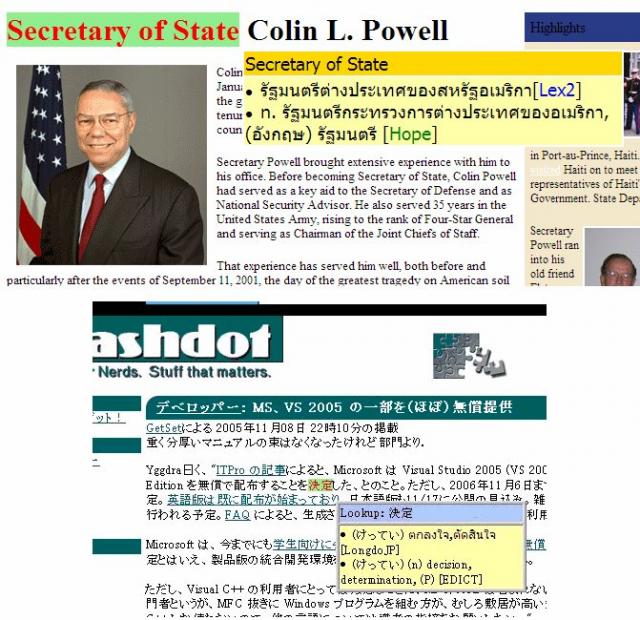
()(なか)入れ(いれ)痛く(いたく)ない


  • (もく) (n) (1) (biological) order; (2) item (of a budget revision, etc.); (ctr) (3) (See 囲碁) counter for go pieces; counter for surrounded positions (in go) [EDICT]
  • (め) (n) (1) eye; eyeball; (2) (See 目が見える) eyesight; sight; vision; (3) look; stare; glance; (4) an experience; (5) viewpoint; (6) (See 編み目) stitch; texture; weave; (suf) (7) ordinal number suffix; (8) (See 大きめ) somewhat; -ish; (P) [EDICT]
  • (mù, ㄇㄨˋ) eye; item; section; list; catalogue; table of contents; order (taxonomy); goal; name; title [CE-DICT]
  • () (prt) endorsing and questioning the preceding statement (sentence ending particle); lamenting reflections on the preceding statement (sentence ending particle) [EDICT]
  • () (prt) (1) although; when; and yet; despite this; in spite of; even though; but even so; but even then; however; nevertheless; for all that; notwithstanding that; (2) while; (3) if only; I wish; (4) I tell you; you should do; (5) in order to; (P) [EDICT]
  • () (suf,prt) (literary equiv. of だけ) only; nothing but; (P) [EDICT]
  • () (n) (See スラグ) slag [EDICT]
  • (乃) (prt) (1) (uk) (occasionally ん) indicates possessive; (2) verb and adjective nominalizer (nominaliser); (3) substituting for "ga" in subordinate phrases; (4) (often ん) indicates a confident conclusion; (5) emotional emphasis (sentence end) (fem); (6) indicates question (sentence end); (P) [EDICT]
  • (之) (prt) (arch) possessive (used on tombs, etc.) [EDICT]
  • (幅) (n,n-suf,ctr) (after a number in the hito-, futa-, mi- counting system) unit of measurement for cloth breadth (30-38 cm) [EDICT]
  • (布) (n,n-suf,ctr) (after a number in the hito-, futa-, mi- counting system) unit of measurement for cloth breadth (30-38 cm) [EDICT]
  • (箆) (n) (1) (arch) shaft (of an arrow); (2) (arch) (See 矢竹・2) arrow bamboo (Pseudosasa japonica) [EDICT]
  • (篦) (n) (1) (arch) shaft (of an arrow); (2) (arch) (See 矢竹・2) arrow bamboo (Pseudosasa japonica) [EDICT]
  • (じゅう;ぢゅう) (suf) (1) through; throughout; in the course of; (2) all over or throughout (e.g. a place) [EDICT]
  • (ちゅう) (suf) (1) (See 並・1) medium; average; middle; (2) moderation; (3) (abbr) (See 中一,中学校) middle school; (4) (abbr) (See 中国・1) China; (n-suf) (5) (See 中・じゅう・2) in; out of (e.g. three out of ten people); (6) (See 話し中) during (a certain time when one did or is doing something); under (construction, etc.); while; (P) [EDICT]
  • (なか) (n) (1) inside; in; (2) among; within; (3) center (centre); middle; (4) during; while; (P) [EDICT]
  • (うち) (n,adj-no) (1) inside; within; (2) (also 裡) while; (3) among; amongst; between; (pn,adj-no) (4) (See 家・うち・2) we (referring to one's in-group, i.e. company, etc.); our; (5) my spouse; (n) (6) (arch) imperial palace grounds; (7) (arch) emperor; (pn,adj-no) (8) (ksb [EDICT]
  • (zhōng, ㄓㄨㄥ) within; among; in; middle; center; while (doing sth); during; China; Chinese [CE-DICT]
  • (zhòng, ㄓㄨㄥˋ) hit (the mark) [CE-DICT]
  • (二) สอง [LongdoJP]
  • () (prt) indicates location of action (formal literary form of "de"); at; in; (P) [EDICT]
  • () (prt) (See に,は) for (in regard to); in order to [EDICT]
  • () (exp) also; too; not ... either; as well; even [EDICT]
  • () (exp) (1) (also にゃあ) (See ねば) if not ... (negative conditional); (2) (See には) for (in regard to); in order to [EDICT]
  • (荷) (n) (1) load; baggage; cargo; freight; goods; (2) burden; responsibility; (P) [EDICT]
  • (似) (suf) takes after (his mother) [EDICT]
  • (丹) (n) red earth (i.e. containing cinnabar or minium); vermilion; (P) [EDICT]
  • (土) (n) (arch) soil (esp. reddish soil) [EDICT]
  • (尼) (n,n-suf) (abbr) (See 比丘尼) bhikkhuni (fully ordained Buddhist nun) [EDICT]
  • (弐) (num) two (used in legal documents) [EDICT]
入れる
  • (いれる) (v1,vt) (1) to put in; to let in; to take in; to bring in; to insert; to set (a jewel, etc.); to ink in (e.g. a tattoo); (2) to admit; to accept; to employ; to hire; (3) (esp. 容れる) to accept; to comply; to grant; to adopt (a policy, etc.); to take (advice, etc.); to listen to; to pay attention to; (4) to include; (5) to pay (one's rent, etc.); (6) to cast (a vote); (7) (See 淹れる) to make (tea, coffee, etc.); (8) to turn on (a switch, etc.); (9) to send (a fax); to call; (P) [EDICT]
  • () (conj) (col) (See と言うか) or rather (say); or better (say); or perhaps I should say; or, how should I put it,...; I mean [EDICT]
  • () (prt) a sort of thing like; used after a phrase to modify the following noun [EDICT]
  • () (prt) (1) (also でも, っても) even if; even though; (int) (2) (abbr) (See さても) wow [EDICT]
  • (手) (n) (1) (occ. pronounced た when a prefix) (See お手・おて・1) hand; arm; (2) (col) (See お手・おて・3) forepaw; foreleg; (3) handle; (4) hand; worker; help; (5) trouble; care; effort; (6) means; way; trick; move; technique; workmanship; (7) hand; handwriting; (8) kind; type; sort; (9) (See 手に入る) one's hands; one's possession; (10) (See 手に余る) ability to cope; (11) hand (of cards); (12) (See 山の手・1) direction; (P) [EDICT]
  • () (adv,int) (1) (See すでに) already; anymore; (2) soon; shortly; (3) more; further; other; again; (int,adv) (4) interjection used to strengthen expression of an emotion (often exasperation); (P) [EDICT]
  • () (n) (from a reversal of くも) (See 雲・くも) cigarette; cig; smoke; fag [EDICT]
  • () (int) excuse me! (when calling out to someone) [EDICT]
  • () (adv) (abbr) (col) (See 勿論・もちろん) of course; for sure; definitely [EDICT]
  • () (n) (abbr) {food} (See 臓物) entrails; giblets; guts; internal organs [EDICT]
  • () (pref) (before a verb) (See もて囃す,もて扱う・1) emphatic prefix [EDICT]
  • (裳) (n) ancient skirt [EDICT]
  • (喪) (n,adj-no) mourning; (P) [EDICT]
  • (藻) (n) duckweed; seaweed; algae; (P) [EDICT]
痛い
  • (いたい) เจ็บ [LongdoJP]
  • (いたい) (adj-i) (1) painful; sore; (adj-i,suf) (2) (esp. 甚い) (See 甚く) exceeding; (P) [EDICT]
ない
  • () (exp) (1) (See ませんか) (used to ask a question in the negative) won't (hasn't, isn't, doesn't, etc.); (2) (used to make invitations, express desires or give indirect commands) won't you [EDICT]
  • () (conj,aux) (1) (See ない) without doing ...; (aux) (2) used in sentence-final position as an indirect prohibition [EDICT]
  • (内) (suf) inside; within [EDICT]
  • (亡い) (adj-i) (See 無い) dead [EDICT]
  • (無い) (adj-i) (1) (uk) (See 亡い) nonexistent; not being (there); (2) unpossessed; unowned; not had; (3) (See またとない) unique; (4) (as ...ことがない, etc.) indicates negation, inexperience, unnecessariness or impossibility; (aux-adj) (5) (See ない) (after the ren'youkei form of an adjective) not ...; (6) (after the -te form of a verb) to not be...; to have not ...; (P) [EDICT]


Search other online dictionaries

English/Thai Dictionary
Thai Dictionary and related
English/Thai Dictionary Software Application
English/English Dictionary
 

Japanese Dictionary
German and German/English Dictionaries
Other translation and dictionary websites
Other interesting resources

Do you know the meaning of this word?

You can Suggest your own translation to Longdo

Discussions

ว่าด้วยโฆษณา
เราทราบดีว่าท่านผู้ใช้คงไม่ได้อยากให้มีโฆษณาเท่าใดนัก แต่โฆษณาช่วยให้ทาง Longdo เรามีรายรับเพียงพอที่จะให้บริการพจนานุกรมได้แบบฟรีๆ ต่อไป ดูรายละเอียดเพิ่มเติม
Go to Top