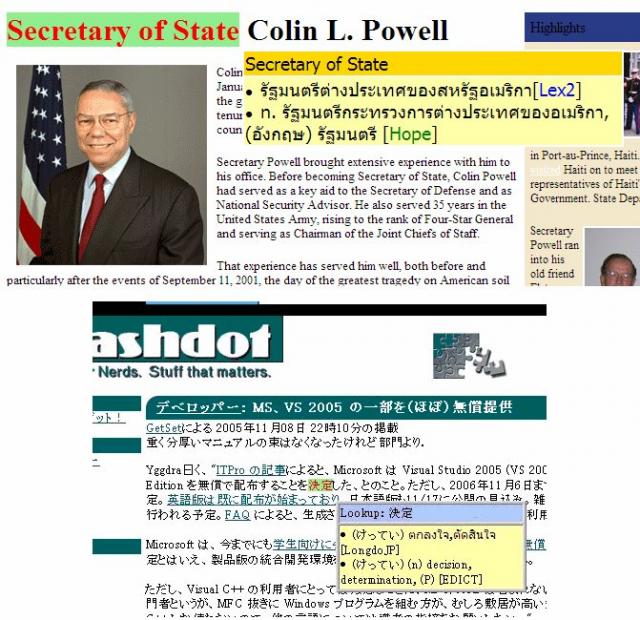
มีผลลัพธ์ที่ไม่แสดงผลอยู่
เพิ่มคำศัพท์
ทราบความหมายของคำศัพท์นี้? กด [เพิ่มคำศัพท์] เพื่อใส่คำนี้พร้อมความหมาย เพื่อเป็นวิทยาทานแก่ผู้ใช้ท่านอื่น ๆ
วางเมาส์ที่คำศัพท์เพื่อแสดงป๊อปอัป
แสดงคำอ่าน
生物化学 ( shēng wù huà xué ) 的 ( de ) 酸 ( suān ) 素 ( sù ) 要求 ( yāo qiú ) 量 ( liáng )
生 (うぶ) (adj-na,n,adj-no) (1) (esp. 初, 初心) innocent; naive; unsophisticated; inexperienced; green; wet behind the ears; (n-pref) (2) (産, 生) birth- [EDICT] (いく) (pref) (arch) vital; virile; lively [EDICT] (き) (n,pref) pure; undiluted; raw; crude [EDICT] (せい;しょう) (n) (1) life; living; (n,n-suf) (2) (せい only) (male) (hum) I; me; myself [EDICT] (なま) (adj-no,adj-na,n,n-pref) (1) raw; uncooked; fresh; (2) natural; unedited; unprocessed; crude; (3) (col) unprotected (i.e. not wearing a condom); (4) live (i.e. not recorded); (5) inexperienced; unpolished; green; (6) (abbr) (See 御生,生意気) impudence; sauciness; (7) (abbr) (See 生ビール) unpasteurized beer; draft beer; draught beer; (pref) (8) partially; somewhat; half-; semi-; (P) [EDICT] (ふ) (n,n-suf) (See 芝生) area of thick growth (of trees, grass, etc.) [EDICT] (なまり) (n) (uk) (abbr) (See 生り節) boiled and half-dried bonito [EDICT] (shēng, ㄕㄥ ) to be born; to give birth; life; to grow [CE-DICT] 物 (ぶつ) (n) (1) (uk) (sl) stock; products; (2) stolen goods; loot; spoils [EDICT] (もの(P);もん) (n) (1) (usually not もん) thing; object; (2) (uk) the natural thing; a frequently done thing; (3) (uk) used to express emotional involvement; (4) (uk) used in giving a reason; (P) [EDICT] (wù, ㄨˋ ) thing; object; matter; abbr. for physics 物理 [CE-DICT] 化 (か) (suf) (See 化する) action of making something; -ification [EDICT] (huā, ㄏㄨㄚ ) variant of 花 [CE-DICT] (huà, ㄏㄨㄚˋ ) to make into; to change into; -ization; to ... -ize; to transform; abbr. for chemistry 化学 [CE-DICT] 学 (がく) (n) learning; scholarship; erudition; knowledge; (P) [EDICT] (xué, ㄒㄩㄝˊ ) learn; study; science; -ology [CE-DICT] 的 (てき) (adj-na,suf) -like; typical; (P) [EDICT] (まと) (n) mark; target; (P) [EDICT] (de, ㄉㄜ˙ ) of; structural particle: used before a noun, linking it to preceding possessive or descriptive attributive [CE-DICT] (dí, ㄉㄧˊ ) really and truly [CE-DICT] (dì, ㄉㄧˋ ) aim; clear [CE-DICT] 酸 (さん) (n) (1) acid; (2) sourness; sour taste; (P) [EDICT] (す) (n) vinegar; (P) [EDICT] (suān, ㄙㄨㄢ ) sour; sore; ache; acid [CE-DICT] 素 (もと) (n) (1) (usu. 元) origin; source; (2) (esp. 基) base; basis; foundation; root; (3) (also 因, 原) cause; (4) (esp. 素) ingredient; material; (5) (元 only) (somebody's) side; (somebody's) location; (6) original cost (or capital, principal, etc.); (7) (plant) root; (tree) trunk; (8) (See 和歌) first section of a waka; (ctr) (9) (本 only) counter for blades of grass, tree trunks, etc., and for falcons (in falconry); (n) (10) handle (chopsticks, brush, etc.); grip; (P) [EDICT] (す) (adj-no,n) (1) plain; unadorned; undecorated; unadulterated; au naturel; (pref) (2) (derog) (before a noun) mere; poor; (3) (before an adjective) exceedingly [EDICT] (そ) (adj-na,n,adj-no) (1) plain, white silk; (2) {math} (See 互いに素) prime; (P) [EDICT] (sù, ㄙㄨˋ ) plain; element [CE-DICT] 要 (かなめ) (n) (1) pivot; (2) vital point; cornerstone; keystone; (3) (See 要黐) Japanese photinia; (P) [EDICT] (よう) (n) (1) cornerstone; main point; keystone; (2) requirement; need; (adj-f) (3) necessary; required [EDICT] (yāo, ㄧㄠ ) demand; ask; request; coerce [CE-DICT] (yào, ㄧㄠˋ ) important; vital; to want; to be going to; must [CE-DICT] 求 (qiú, ㄑㄧㄡˊ ) to seek; to look for; to request; to demand; to beseech [CE-DICT] 量 (りょう) (n,n-suf) quantity; amount; volume; portion (of food); (P) [EDICT] (liáng, ㄌㄧㄤˊ ) to measure [CE-DICT] (liàng, ㄌㄧㄤˋ ) capacity; quantity; amount; to estimate [CE-DICT]
Search other online dictionaries
Do you know the meaning of this word? You can Suggest your own translation to Longdo
Discussions