(り) (n) (1) reason; principle; logic; (2) {Buddh} (See 事・じ) general principle (as opposed to individual concrete phenomenon); (3) (in neo-Confucianism) the underlying principles of the cosmos; (P) [EDICT]
(ことわり) (n) (See 道理) reason; truth; way of things; justice [EDICT]
(lǐ, ㄌㄧˇ) texture; grain (of wood); inner essence; intrinsic order; reason; logic; truth; science; natural science (esp. physics); to manage; to pay attention to; to run (affairs); to handle; to put in order; to tidy up [CE-DICT]
屈
(qū, ㄑㄩ) bent; feel wronged; surname Qu [CE-DICT]
屋
(や) (suf) (1) (usu. 屋) (See パン屋) (something) shop; (2) (usu. 屋, can be derog.) (See 殺し屋) somebody who sells (something) or works as (something); (3) (usu. 屋) (See 照れ屋) somebody with a (certain) personality trait; (n) (4) (usu. 家) house; (5) roof [EDICT]
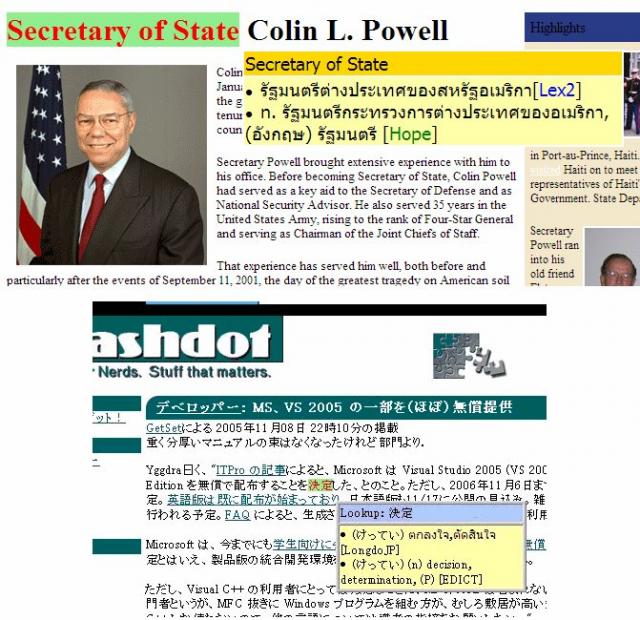
แสดงได้ทั้งความหมายของคำเดี่ยว และคำผสม ได้อย่างถูกต้อง
เช่น Secretary of State=รัฐมนตรีต่างประเทศของสหรัฐฯ (ในภาพตัวอย่าง),
High school=โรงเรียนมัธยมปลาย