อ่านผิดไม่ใช่เรื่องแปลก! คำว่า “Odyssey” หนังเรื่องดัง จริงๆ อ่านว่าอะไรกันแน่? 🎬✨ ช่วงนี้ใครๆ ก็พูดถึงภาพยนตร์เรื่องใหม่อย่าง “Odyssey” หนังมหากาพย์ระดับโลกที่สร้างจากมหากาพย์ของ Odysseus เรื่องราวการผจญภัยเดินทางกลับบ้านอันยาวนาน แต่ก่อนจะชวนเพื่อนไปดูหนัง ลองเช็กกันหน่อยว่าคุณกำลังออกเสียงชื่อหนังเรื่องนี้ถูกต้องอยู่หรือเปล่า? 💡 แล้ว “Odyssey” ที่ถูกต้องอ่านว่าอะไร? คำนี้ออกเสียงที่ถูกต้องว่า “ออ-เดอะ-สี่” (/ˈɑː.də.si/) ✅ โดยเน้นลงเสียงหนัก (Stress) ที่พยางค์แรก “ออ” ทำไมคนส่วนใหญ่ถึงอ่านผิดเป็น “โอดิสซี่”? ถ้ารู้จักหลักการออกเสียง 3 ข้อนี้ แล้วจะเก็ททันทีว่าทำไมเราถึงหลงอ่านผิดกันมาตั้งนาน: 🌊...
สรุปรวม “เครื่องหมายวรรคตอน” (Punctuation): ฮีโร่ผู้อยู่เบื้องหลังทุกตัวอักษร ลองจินตนาการว่าคุณกำลังอ่านบทความภาษาอังกฤษอยู่โดยที่ไม่มีช่องว่างไม่มีเครื่องหมายคำถามไม่มีจุดฟูลสต็อปและไม่มีอะไรเลยคุณคงจะรู้สึกอึดอัดและหมดแรงตั้งแต่สามประโยคแรกใช่ไหมคะ? นี่คือเหตุผลที่ เครื่องหมายวรรคตอน (Punctuation) ถูกคิดค้นขึ้นมา พวกมันไม่ได้เป็นแค่สัญลักษณ์แปลกๆ ที่ถูกสาดลงบนหน้ากระดาษ แต่เป็นเหมือน “ป้ายจราจร” ในโลกของภาษาที่คอยบอกคนอ่านว่าควรหยุดตอนไหน ควรเว้นหายใจเมื่อไหร่ และควรใส่อารมณ์กับประโยคนั้นอย่างไร เมื่อเครื่องหมายเปลี่ยน ชีวิตก็เปลี่ยน ความทรงพลังของเครื่องหมายวรรคตอนเห็นได้ชัดที่สุดผ่านตำแหน่งของมัน บ่อยครั้งที่การวางเครื่องหมายผิดที่ สามารถเปลี่ยนความหมายจากหน้ามือเป็นหลังมือ หรืออาจถึงขั้น “เปลี่ยนชีวิต” ได้เลยทีเดียว ลองดูตัวอย่างคลาสสิกในภาษาอังกฤษนี้: แบบที่...
ประโยคภาษาอังกฤษใช้บ่อยในที่ทำงาน คุณเคยเจอสถานการณ์นี้ไหม? เวลาคุยภาษาอังกฤษกับเพื่อนร่วมงานหรือชาวต่างชาติ แล้วอยากจะบอกว่า “ฉันเข้าใจที่คุณพูดนะ” แต่ในหัวกลับคิดออกอยู่ประโยคเดียวคือ “I understand” การสื่อสารที่มีเสน่ห์และดูเป็นธรรมชาติเหมือนเจ้าของภาษา (Idiomatic expressions) มักจะผสมผสานระหว่าง Simple Sentences (ประโยคความเดียวที่กระชับ ตรงประเด็น) และ Idioms หรือ Slang (สำนวนที่สละสลวย) เข้าด้วยกัน วันนี้เรามาดูตัวอย่างประโยคที่ใช้บ่อยในการทำงานและชีวิตประจำวัน เพื่ออัปเกรดภาษาอังกฤษของคุณให้ดูโปรและเป็นธรรมชาติมากขึ้น 1. หมวด: “ฉันเข้าใจสิ่งที่คุณต้องการจะสื่อ” เวลาต้องการแสดงความเข้าอกเข้าใจ หรือบอกว่าเราตามความคิดของอีกฝ่ายทัน...
ผลลัพธ์การค้นหาสำหรับ

家丑不可外传,流言切莫轻信

   
ภาษา
Dictionaries languages

English Phonetic Symbols


Chinese Phonetic Symbols


ลองค้นหาคำในรูปแบบอื่น ๆ เพื่อให้ได้ผลลัพธ์มากขึ้นหรือน้อยลง: -家丑不可外传,流言切莫轻信-, *家丑不可外传,流言切莫轻信*
มีผลลัพธ์ที่ไม่แสดงผลอยู่
ปรับการตั้งค่า
Dictionaries languages

English Phonetic Symbols


Chinese Phonetic Symbols


Chinese-English: CC-CEDICT Dictionary
家丑不可外传,流言切莫轻信[jiā chǒu bù kě wài chuán, liú yán qiē mò qīng xìn, ㄐㄧㄚ ㄔㄡˇ ㄅㄨˋ ㄎㄜˇ ㄨㄞˋ ㄔㄨㄢˊ, ㄌㄧㄡˊ ㄧㄢˊ ㄑㄧㄝ ㄇㄛˋ ㄑㄧㄥ ㄒㄧㄣˋ,              /             ] Don't spread abroad the shame of the family, don't believe rumors lightly (俗语 common expression); Don't wash your dirty linen in public, don't listen to others' gossip., See also: 俗语 [Add to Longdo]

เพิ่มคำศัพท์


ทราบความหมายของคำศัพท์นี้? กด [เพิ่มคำศัพท์] เพื่อใส่คำนี้พร้อมความหมาย เพื่อเป็นวิทยาทานแก่ผู้ใช้ท่านอื่น ๆ


ติดโพย (PopThai)
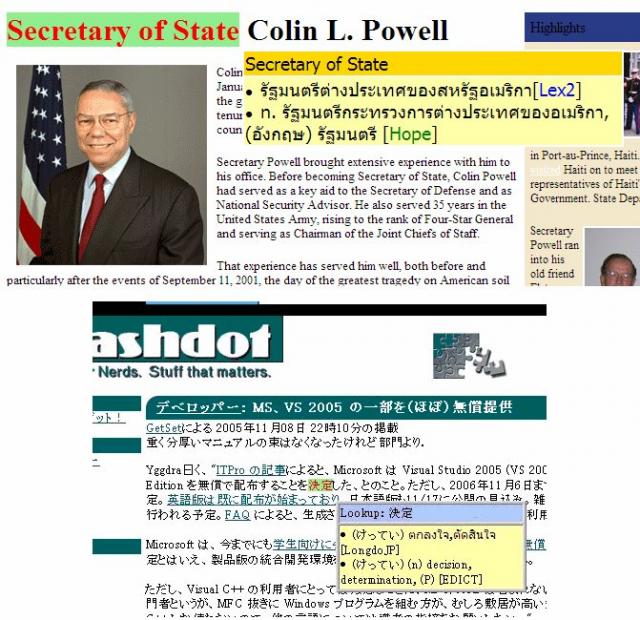
 วางเมาส์ที่คำศัพท์เพื่อแสดงป๊อปอัป


(jiā) (chǒu)不可 (bù kě) (wài) (chuán)流言 (liú yán) (qiē) () (qīng) (xìn)


  • (いえ) บ้าน [LongdoJP]
  • (や) (suf) (1) (usu. 屋) (See パン屋) (something) shop; (2) (usu. 屋, can be derog.) (See 殺し屋) somebody who sells (something) or works as (something); (3) (usu. 屋) (See 照れ屋) somebody with a (certain) personality trait; (n) (4) (usu. 家) house; (5) roof [EDICT]
  • (いえ) (n) (1) house; residence; dwelling; (2) family; household; (3) lineage; family name; (P) [EDICT]
  • (うち(P);ち) (n,adj-no) (1) house; home (one's own); (pn,adj-no) (2) (See 内・うち・4) (one's) family; (one's) household; (P) [EDICT]
  • (か) (suf) (See 政治家) -ist (used after a noun indicating someone's occupation, pursuits, disposition, etc.); -er [EDICT]
  • (け) (suf) house (e.g. of Tokugawa); family; (P) [EDICT]
  • (んち) (suf,exp) (uk) (abbr) (from 〜のうち) (See 家・ち・1) 's house; 's home [EDICT]
  • (jiā, ㄐㄧㄚ) furniture; tool [CE-DICT]
  • (jiā, ㄐㄧㄚ) home; family; classifier for families or businesses; refers to the philosophical schools of pre-Han China; noun suffix for specialists in some activity such as musician or revolutionary, corresponds to English -ist, -er, -ary or -ian; surname Jia [CE-DICT]
  • (うし) (n) second sign of Chinese zodiac (The Ox, 1am-3am, north-northeast, December) [EDICT]
  • (chǒu, ㄔㄡˇ) clown; surname Chou; 2nd earthly branch: 1-3 a.m., 12th solar month (6th January to 3rd February), year of the Ox [CE-DICT]
  • (chǒu, ㄔㄡˇ) shameful; ugly; disgraceful [CE-DICT]
  • (ふ) (pref) un-; non-; negative prefix [EDICT]
  • (ぶ) (pref) (1) un-; non-; (2) bad ...; poor ... [EDICT]
  • (bù, ㄅㄨˋ) (negative prefix); not; no [CE-DICT]
  • (か) (n,n-suf) passable; acceptable; tolerable; fair; (P) [EDICT]
  • (kě, ㄎㄜˇ) can; may; able to; to approve; to permit; certain(ly); to suit; (particle used for emphasis) [CE-DICT]
  • (がい) (n-suf) (See 専門外) outside of; not covered by [EDICT]
  • (そと) (n) (1) outside; exterior; (2) open air; (3) other place; (P) [EDICT]
  • (ほか) (adj-no,n,n-adv) other (esp. places and things); the rest; (P) [EDICT]
  • (よそ) (n) (1) (See 他所・たしょ・1) another place; somewhere else; strange parts; (2) (ant [EDICT]
  • (wài, ㄨㄞˋ) outside; in addition; foreign; external [CE-DICT]
  • (chuán, ㄔㄨㄢˊ) to pass on; to spread; to transmit; to infect; to transfer; to circulate; to pass on; to conduct (electricity) [CE-DICT]
  • (zhuàn, ㄓㄨㄢˋ) biography [CE-DICT]
  • (りゅう) (n,n-suf) style of; method of; manner of; school (of thought); (P) [EDICT]
  • (る) (n) (arch) (See 五刑) exile [EDICT]
  • (liú, ㄌㄧㄡˊ) to flow; to spread; to circulate; to move [CE-DICT]
  • (げん(P);こと) (n) word; remark; statement; (P) [EDICT]
  • (yán, ㄧㄢˊ) to speak; to say; talk; word [CE-DICT]
  • (せつ) (adj-na,n) eager; earnest; ardent; kind; keen; acute [EDICT]
  • (qiē, ㄑㄧㄝ) to cut; to slice [CE-DICT]
  • (qiè, ㄑㄧㄝˋ) close to [CE-DICT]
  • (まな) (n) (arch) must not; may not [EDICT]
  • (mò, ㄇㄛˋ) do not; there is none who [CE-DICT]
  • (Mò, ㄇㄛˋ) surname Mo [CE-DICT]
  • (qīng, ㄑㄧㄥ) light; easy; gentle; soft; reckless; unimportant; frivolous; small in number; unstressed; neutral [CE-DICT]
  • (しん) (adv,n) (1) honesty; fidelity; (2) trust; reliance; (3) (religious) faith; (ctr) (4) counter for received messages; (P) [EDICT]
  • (xìn, ㄒㄧㄣˋ) letter; true; to believe; sign; evidence [CE-DICT]


Search other online dictionaries

English/Thai Dictionary
Thai Dictionary and related
English/Thai Dictionary Software Application
English/English Dictionary
 

Japanese Dictionary
German and German/English Dictionaries
Other translation and dictionary websites
Other interesting resources

Do you know the meaning of this word?

You can Suggest your own translation to Longdo

Discussions

ว่าด้วยโฆษณา
เราทราบดีว่าท่านผู้ใช้คงไม่ได้อยากให้มีโฆษณาเท่าใดนัก แต่โฆษณาช่วยให้ทาง Longdo เรามีรายรับเพียงพอที่จะให้บริการพจนานุกรมได้แบบฟรีๆ ต่อไป ดูรายละเอียดเพิ่มเติม
Go to Top