อัปสกิลอินเตอร์! ด้วย “สำนวนสัตว์โลก” (Animal Idioms) สุดคิ้วท์ที่ฝรั่งใช้บ่อยมาก เคยไหมคะ? เวลานั่งดูซีรีส์เรื่องโปรด หรือคุยกับเพื่อนต่างชาติ แล้วอยู่ ๆ เขาก็พูดคำว่า “ฝนตกเป็นแมวเป็นหมา” หรือ “มีผีเสื้ออยู่ในท้อง” ขึ้นมาเสียดื้อ ๆ จนเราแอบเอ๊ะในใจว่า “ห๊ะ? แปลว่าอะไรนะ?” เพราะถ้าแปลตรงตัวเนี่ย บอกเลยว่ามึนตึ้บแน่นอนค่ะ! ในภาษาอังกฤษมีสิ่งที่เรียกว่า Idioms (สำนวน) อยู่เยอะมาก ๆ ค่ะ และหนึ่งในหมวดที่ฮิตแถมยังน่ารักสุด ๆ ก็คือ “สำนวนเกี่ยวกับสัตว์” เพราะคนสมัยก่อนมักจะหยิบยกพฤติกรรมของเจ้าพวกสี่ขาหรือสัตว์รอบตัวมาเปรียบเปรยกับนิสัยของมนุษย์ วันนี้เราจะพาทุกคนไปอัปคลังคำศัพท์กับสำนวนสัตว์โลกสุดฮิตที่รู้ไว้ ได้ใช้ในชีวิตประจำวันแน่นอนค่ะ! 🐶...
ประโยคภาษาอังกฤษใช้บ่อยในที่ทำงาน คุณเคยเจอสถานการณ์นี้ไหม? เวลาคุยภาษาอังกฤษกับเพื่อนร่วมงานหรือชาวต่างชาติ แล้วอยากจะบอกว่า “ฉันเข้าใจที่คุณพูดนะ” แต่ในหัวกลับคิดออกอยู่ประโยคเดียวคือ “I understand” การสื่อสารที่มีเสน่ห์และดูเป็นธรรมชาติเหมือนเจ้าของภาษา (Idiomatic expressions) มักจะผสมผสานระหว่าง Simple Sentences (ประโยคความเดียวที่กระชับ ตรงประเด็น) และ Idioms หรือ Slang (สำนวนที่สละสลวย) เข้าด้วยกัน วันนี้เรามาดูตัวอย่างประโยคที่ใช้บ่อยในการทำงานและชีวิตประจำวัน เพื่ออัปเกรดภาษาอังกฤษของคุณให้ดูโปรและเป็นธรรมชาติมากขึ้น 1. หมวด: “ฉันเข้าใจสิ่งที่คุณต้องการจะสื่อ” เวลาต้องการแสดงความเข้าอกเข้าใจ หรือบอกว่าเราตามความคิดของอีกฝ่ายทัน...
สรุปรวม “เครื่องหมายวรรคตอน” (Punctuation): ฮีโร่ผู้อยู่เบื้องหลังทุกตัวอักษร ลองจินตนาการว่าคุณกำลังอ่านบทความภาษาอังกฤษอยู่โดยที่ไม่มีช่องว่างไม่มีเครื่องหมายคำถามไม่มีจุดฟูลสต็อปและไม่มีอะไรเลยคุณคงจะรู้สึกอึดอัดและหมดแรงตั้งแต่สามประโยคแรกใช่ไหมคะ? นี่คือเหตุผลที่ เครื่องหมายวรรคตอน (Punctuation) ถูกคิดค้นขึ้นมา พวกมันไม่ได้เป็นแค่สัญลักษณ์แปลกๆ ที่ถูกสาดลงบนหน้ากระดาษ แต่เป็นเหมือน “ป้ายจราจร” ในโลกของภาษาที่คอยบอกคนอ่านว่าควรหยุดตอนไหน ควรเว้นหายใจเมื่อไหร่ และควรใส่อารมณ์กับประโยคนั้นอย่างไร เมื่อเครื่องหมายเปลี่ยน ชีวิตก็เปลี่ยน ความทรงพลังของเครื่องหมายวรรคตอนเห็นได้ชัดที่สุดผ่านตำแหน่งของมัน บ่อยครั้งที่การวางเครื่องหมายผิดที่ สามารถเปลี่ยนความหมายจากหน้ามือเป็นหลังมือ หรืออาจถึงขั้น “เปลี่ยนชีวิต” ได้เลยทีเดียว ลองดูตัวอย่างคลาสสิกในภาษาอังกฤษนี้: แบบที่...
Today’s Lesson: เมคอัพสไตล์ “ปรุงจืด” ในภาษาอังกฤษ ถ้าพูดถึงเทรนด์บิวตี้ที่มาแรงและยืนหนึ่งในใจใครหลายคนตอนนี้ คงหนีไม่พ้นการแต่งหน้าโทนละมุน ๆ นวล ๆ หรือที่ชาวเน็ตไทยเรียกกันอย่างเอ็นดูว่า “แต่งหน้าแบบปรุงจืด”  คำว่า ปรุงจืด ในที่นี้ไม่ได้แปลว่าจืดชืดไร้มิติ แต่หมายถึงการแต่งหน้าเน้นความสวยแบบธรรมชาติ ไม่เน้นสีสันที่ฉูดฉาด ไม่คัดเบ้าตาแน่น หรือ กรีดอายไลเนอร์คมกริบ แต่เป็นการ “แต่งเหมือนไม่ได้แต่ง” ที่ดูแพงและสบายตา แล้วถ้าเราอยากจะอธิบายลุคนี้เป็นภาษาอังกฤษล่ะ? จะใช้คำว่าอะไรให้ตรงเรฟและอินเทรนด์ที่สุด วันนี้เราสรุปมาให้แล้ว 3 คีย์เวิร์ดภาษาอังกฤษของสาว...
ผลลัพธ์การค้นหาสำหรับ

君の瞳に乾杯

   
ภาษา
Dictionaries languages

English Phonetic Symbols


Chinese Phonetic Symbols


ลองค้นหาคำในรูปแบบอื่น ๆ เพื่อให้ได้ผลลัพธ์มากขึ้นหรือน้อยลง: -君の瞳に乾杯-, *君の瞳に乾杯*
มีผลลัพธ์ที่ไม่แสดงผลอยู่
ปรับการตั้งค่า
Dictionaries languages

English Phonetic Symbols


Chinese Phonetic Symbols


Japanese-English: EDICT Dictionary
君の瞳に乾杯[きみのひとみにかんぱい, kiminohitominikanpai] (exp) (id) (from the movie Casablanca) Here's looking at you, kid; Here's cheers to your eyes [Add to Longdo]

ตัวอย่างประโยค จาก Open Subtitles  **ระวัง คำแปลอาจมีข้อผิดพลาด**
- These are just for looking at you.[JP] - 君の瞳に乾杯といきたいね Space Cowboys (2000)
Here's looking at you, kid.[JP] 君の瞳に乾杯 Il Tavolo Bianco (2014)

เพิ่มคำศัพท์


ทราบความหมายของคำศัพท์นี้? กด [เพิ่มคำศัพท์] เพื่อใส่คำนี้พร้อมความหมาย เพื่อเป็นวิทยาทานแก่ผู้ใช้ท่านอื่น ๆ


ติดโพย (PopThai)
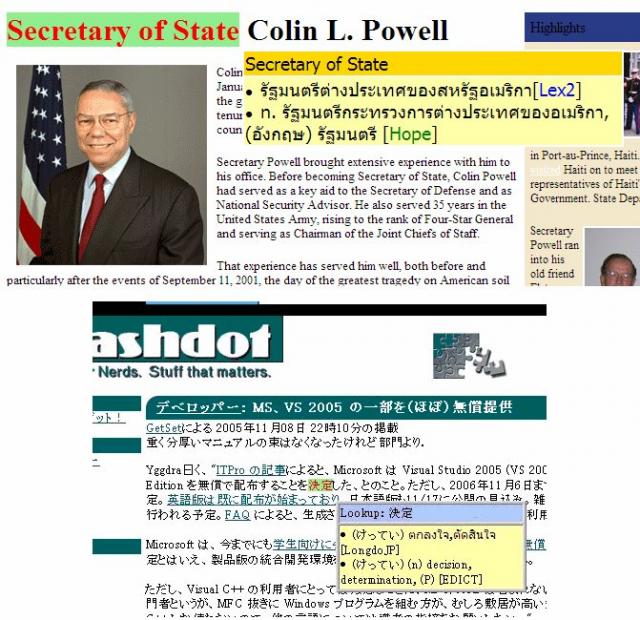
 วางเมาส์ที่คำศัพท์เพื่อแสดงป๊อปอัป


(きみ)(ひとみ)乾杯(かんぱい)


  • (きみ) สรรพนามบุรุษที่ 2 [LongdoJP]
  • (くん) (n,suf) Mr (junior); master; boy; (P) [EDICT]
  • (きみ) (pn,adj-no) (1) (male) (fam) (used colloquially by young females) you; buddy; pal; (2) (arch) monarch; ruler; sovereign; (one's) master; (P) [EDICT]
  • (jūn, ㄐㄩㄣ) monarch; lord; gentleman; ruler [CE-DICT]
  • () (prt) endorsing and questioning the preceding statement (sentence ending particle); lamenting reflections on the preceding statement (sentence ending particle) [EDICT]
  • () (prt) (1) although; when; and yet; despite this; in spite of; even though; but even so; but even then; however; nevertheless; for all that; notwithstanding that; (2) while; (3) if only; I wish; (4) I tell you; you should do; (5) in order to; (P) [EDICT]
  • () (suf,prt) (literary equiv. of だけ) only; nothing but; (P) [EDICT]
  • () (n) (See スラグ) slag [EDICT]
  • (乃) (prt) (1) (uk) (occasionally ん) indicates possessive; (2) verb and adjective nominalizer (nominaliser); (3) substituting for "ga" in subordinate phrases; (4) (often ん) indicates a confident conclusion; (5) emotional emphasis (sentence end) (fem); (6) indicates question (sentence end); (P) [EDICT]
  • (之) (prt) (arch) possessive (used on tombs, etc.) [EDICT]
  • (幅) (n,n-suf,ctr) (after a number in the hito-, futa-, mi- counting system) unit of measurement for cloth breadth (30-38 cm) [EDICT]
  • (布) (n,n-suf,ctr) (after a number in the hito-, futa-, mi- counting system) unit of measurement for cloth breadth (30-38 cm) [EDICT]
  • (箆) (n) (1) (arch) shaft (of an arrow); (2) (arch) (See 矢竹・2) arrow bamboo (Pseudosasa japonica) [EDICT]
  • (篦) (n) (1) (arch) shaft (of an arrow); (2) (arch) (See 矢竹・2) arrow bamboo (Pseudosasa japonica) [EDICT]
  • (ひとみ) (n) (1) pupil (of eye); (2) eye; (P) [EDICT]
  • (tóng, ㄊㄨㄥˊ) pupil of the eye [CE-DICT]
  • (二) สอง [LongdoJP]
  • () (prt) indicates location of action (formal literary form of "de"); at; in; (P) [EDICT]
  • () (prt) (See に,は) for (in regard to); in order to [EDICT]
  • () (exp) also; too; not ... either; as well; even [EDICT]
  • () (exp) (1) (also にゃあ) (See ねば) if not ... (negative conditional); (2) (See には) for (in regard to); in order to [EDICT]
  • (荷) (n) (1) load; baggage; cargo; freight; goods; (2) burden; responsibility; (P) [EDICT]
  • (似) (suf) takes after (his mother) [EDICT]
  • (丹) (n) red earth (i.e. containing cinnabar or minium); vermilion; (P) [EDICT]
  • (土) (n) (arch) soil (esp. reddish soil) [EDICT]
  • (尼) (n,n-suf) (abbr) (See 比丘尼) bhikkhuni (fully ordained Buddhist nun) [EDICT]
  • (弐) (num) two (used in legal documents) [EDICT]
乾杯
  • (かんぱい) (n,vs) (1) toast; drink (in celebration or in honor of something); (2) drinking one's glass dry; (int) (3) cheers; (P) [EDICT]
  • (gān bēi, ㄍㄢ ㄅㄟ) to drink a toast; Cheers! (proposing a toast); Here's to you!; Bottoms up!; lit. dry cup [CE-DICT]


Search other online dictionaries

English/Thai Dictionary
Thai Dictionary and related
English/Thai Dictionary Software Application
English/English Dictionary
 

Japanese Dictionary
German and German/English Dictionaries
Other translation and dictionary websites
Other interesting resources

Do you know the meaning of this word?

You can Suggest your own translation to Longdo

Discussions

ว่าด้วยโฆษณา
เราทราบดีว่าท่านผู้ใช้คงไม่ได้อยากให้มีโฆษณาเท่าใดนัก แต่โฆษณาช่วยให้ทาง Longdo เรามีรายรับเพียงพอที่จะให้บริการพจนานุกรมได้แบบฟรีๆ ต่อไป ดูรายละเอียดเพิ่มเติม
Go to Top